
According to the latest data from Vietnam’s National Administration of Tourism and official tourism statistics, Vietnam has seen a strong resurgence in international arrivals in 2025. Over 45,000 visitors arrived by sea via cruise ships at major ports such as Ha Long, Da Nang, Nha Trang and Ho Chi Minh City. Cruise tourism is becoming an increasingly visible part of Vietnam’s travel landscape, with luxury liners bringing thousands of international passengers to explore the country’s beaches, cultural sites, and heritage cities.
As one of these upcoming visitors, you may already be asking an important question: What are the Vietnam Visa for cruise passengers requirements? Do you need to arrange a visa before departure? Is a landing card required? And how does the immigration process work when arriving by ship? This guide from Vietnam Shore Excursions provides a clear and up-to-date explanation of Vietnam Visa for Cruise Passengers regulations, including visa exemptions, landing card procedures, and port entry requirements.
Do Cruise Passengers Need a Visa for Vietnam?
Yes or No. The answer depends on your nationality.
Vietnam has different entry rules for different countries. Cruise passengers are not automatically exempt from visa requirements, but many nationalities qualify for visa-free entry.
Visa Exemption Countries

Citizens from certain countries (including the UK and several EU nations) can enter Vietnam visa-free for a limited number of days. Under Government Resolution No. 44/NQ-CP, effective from March 15, 2025 to March 14, 2028, citizens of certain countries are allowed to enter Vietnam without a visa and stay for up to 45 days per visit, as long as their passport is valid and they meet standard entry requirements.
- Duration: Up to 45 days visa-free for eligible travelers.
- Who it applies to: Citizens of specific countries listed by the Government of Vietnam (including Germany, France, Italy, Spain, UK, Rusia, Japan, South Korea, Denmark, Sweden, Norway, Finland).
- How it works for cruise passengers: You can disembark and explore Vietnam without applying for a visa ahead of time, as long as you meet the visa-free conditions and your cruise port arrival falls within your permitted stay.
Countries Eligible for a Vietnam E-Visa
If your nationality is not included in Vietnam’s visa-free list, you may still enter Vietnam by applying for an e-visa before your cruise arrives. Vietnam’s e-visa system is officially issued by the Vietnam Immigration Department (Ministry of Public Security) and is available to citizens of many countries worldwide.
Here is what cruise passengers need to know:
- The e-visa is applied for online through the official government portal.
- It is typically valid for up to 90 days, either single-entry or multiple-entry (depending on what you apply for).
- Your port of entry must match one of the approved seaports listed in the e-visa system.
Some of the most common nationalities among cruise passengers who qualify for an e-visa include:
- United States
- Australia
- Canada
- New Zealand
- India
- Netherlands
- Switzerland
- Belgium
For cruise travelers, this detail is important. You must ensure that the seaport shown on your e-visa application corresponds with your cruise itinerary (for example, Ha Long, Da Nang, or Ho Chi Minh City).
The standard processing time for a Vietnam e-visa is typically 3 to 5 working days, according to the Vietnam Immigration Department. However, during peak travel seasons or if additional information is required, it may take up to 7 working days. Cruise passengers are strongly advised to apply at least 1 – 2 weeks before departure to avoid any last-minute issues.
Countries Requiring a Visa in Advance
Some nationalities are not eligible for visa-free entry or the standard e-visa system. In these cases, cruise ship passengers must arrange a visa before traveling to Vietnam.
This may involve:
- Applying directly through a Vietnamese Embassy or Consulate in your country
- Working with an authorized visa agent
- Following specific instructions provided by your cruise line
It is important not to assume that your cruise company will automatically arrange your visa. In most cases, visa responsibility remains with the individual traveler. If you are unsure which category applies to you, check the latest official information from the Vietnam Immigration Department or contact your cruise operator well before departure.
Immigration Process at Vietnam Cruise Ports
The procedure is generally similar at major cruise ports such as: Ha Long Bay, Da Nang (Chan May Port), Ho Chi Minh City (Phu My Port). Here’s what usually happens:
Step 1: Receive Landing Instructions
- Before arrival, the cruise line provides immigration instructions and any required forms.
Step 2: Immigration Officials Board the Ship
- Vietnamese authorities may board the vessel to process entry clearance for all passengers.
Step 3: Disembarkation Check: When you leave the ship:
- You present your cruise card
- You may present your landing card
- Officials verify clearance
Step 4: Join Your Shore Excursion
- Once cleared, you are free to join your Vietnam shore excursions or explore independently (within permitted time limits).
The process is typically efficient and organized.
Why Does the Cruise Ship Keep Your Passport?
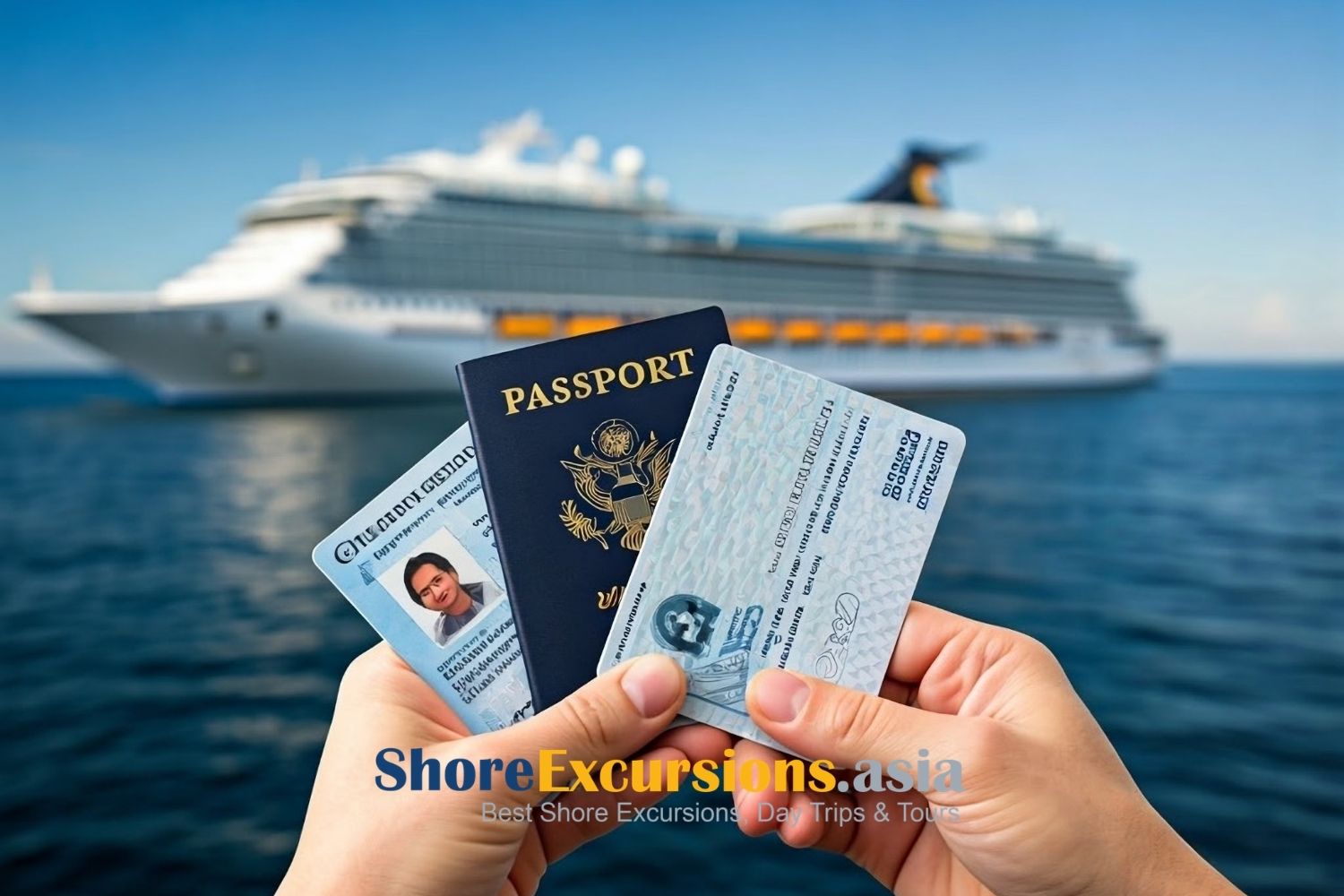
Many first-time cruise passengers feel uncomfortable when the ship collects their passports before arriving in Vietnam and other cruise ports. This is completely normal as a part of standard maritime immigration procedures in many countries, including Vietnam.
Here is what actually happens behind the scenes.
- Cruise lines submit passenger manifests to Vietnamese immigration authorities.
- Immigration officials often board the ship to process entry clearance collectively.
- Holding passports temporarily helps streamline the process.
- It reduces long immigration queues at the port terminal.
In most cases, you do not need to carry your physical passport ashore. The cruise line provides a clearance card or landing card instead. This system is designed to save time, not restrict you.
What Is the Vietnam Landing Card?
First, a Vietnam landing card is not a visa and it does not replace a visa if one is required. It is a temporary immigration control document used specifically for passengers arriving by sea, including cruise travelers. The landing card forms part of the standard port entry procedure implemented by Vietnamese immigration authorities.
The Vietnam landing card serves several important purposes:
- It records your official arrival at a Vietnamese seaport.
- It confirms that your entry has been cleared by immigration authorities.
- It allows you to go ashore legally during the ship’s port stay.
- It helps authorities track cruise passengers who enter and exit on the same vessel.
Requirements of cruise landing card may vary depending on nationality and visa status, but generally:
- Visa-exempt passengers (such as those eligible for 45-day visa-free entry) may still complete a landing card as part of port processing.
- E-visa holders may also be issued or required to complete a landing card for administrative tracking.
- Passengers whose visas are arranged through cruise operators may receive pre-filled forms for verification.
Important Notes for International Cruise Travelers
Even though cruise lines assist with immigration procedures, entry responsibility ultimately remains with each passenger. Before your ship arrives in Vietnam, make sure you review the following carefully:
- Check current visa exemption validity
- Confirm maximum allowed stay (for example, 45 days for certain nationalities)
- Ensure your passport has sufficient validity
- Apply for an e-visa in advance if required
- Do not overstay your permitted time
FAQs about Vietnam Visa for Cruise Passengers
Can I go ashore without my physical passport?
Usually, yes.
Once immigration clearance is completed:
- You typically only need your cruise card and landing card.
- Your passport remains securely stored on the ship.
However, always follow instructions from your cruise line, as procedures may vary slightly by port.
What happens if I do not complete the landing card?
Failure to complete required immigration documents may:
- Delay your disembarkation
- Prevent you from going ashore
- Cause administrative complications
Always complete forms carefully and return them as instructed.
What if I overstay my visa-free period?
Overstaying in Vietnam can result in:
- Fines
- Exit delays
- Potential restrictions on future entry
Even if you are arriving by cruise, immigration rules still apply. If your travel plans change unexpectedly, contact immigration authorities or your cruise operator immediately.
Do children need a visa for Vietnam cruise travel?
Yes. Visa rules apply based on nationality, not age. Children traveling on their own passport must meet the same visa or visa-free requirements as adults. Parents should verify visa eligibility for each family member before departure.
Does the cruise line automatically arrange my Vietnam visa?
No, in most cases. Cruise lines handle group immigration procedures, but individual visa responsibility remains with the passenger unless explicitly stated otherwise. Always verify your visa status before your cruise departs.
Where can I check official Vietnam visa information?
For the most reliable and updated information, consult:
- The Vietnam Immigration Department
- The official e-visa portal
- Your nearest Vietnamese Embassy or Consulate
Avoid relying solely on online forums or outdated travel blogs.
Book Your Vietnam Shore Excursions with Confidence
Navigating visa rules and immigration procedures can feel overwhelming, especially if it’s your first cruise to Vietnam. At Vietnam Shore Excursions, we:
- Understand cruise immigration procedures at major ports
- Coordinate closely with port authorities and cruise schedules
- Guarantee on-time return to your ship
- Assist with entry-related questions before your arrival
Our team works specifically with cruise passengers, so you can focus on enjoying Ha Long Bay, Da Nang, or Ho Chi Minh City. If you are unsure about your visa or landing card requirements, contact us before your cruise arrives. We’re happy to guide you.


 Contact Us via Messenger
 Send Inquiry