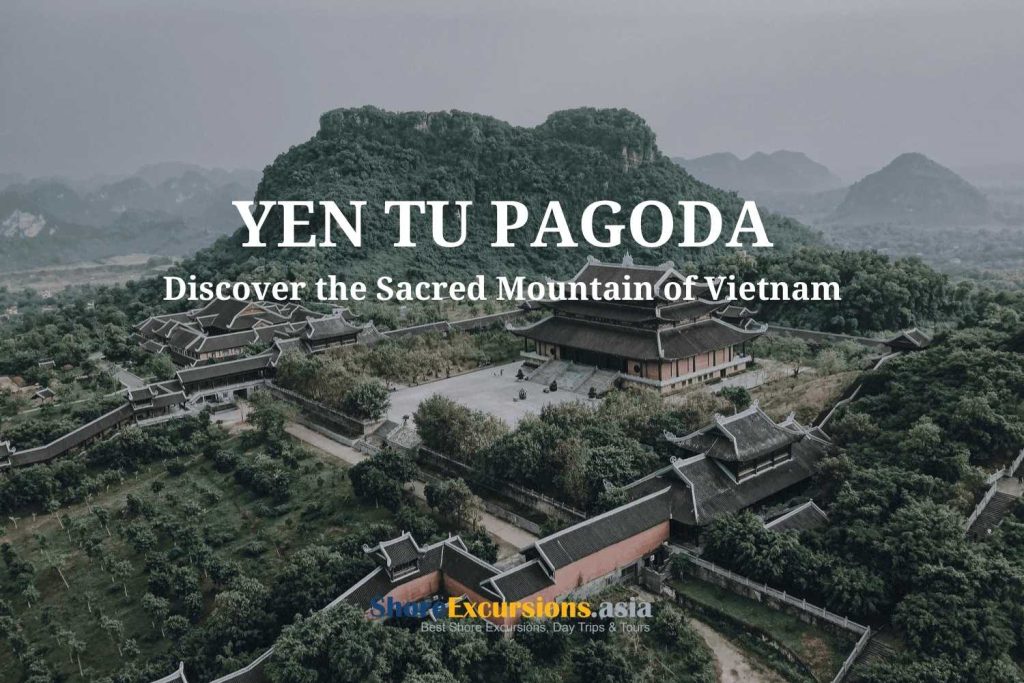
Yen Tu is a famous Buddhist land with the Yen Tu tourist area showcasing poetic beauty and a system of pagodas with unique ancient architecture, attracting tourists from all over. Nestled amidst the grandeur of mountainous landscapes, the Yen Tu Pagoda complex of relics exudes a serene ancient charm deeply intertwined with the history and growth of Vietnam’s Truc Lam Zen sect.
For those seeking a spiritual journey, Yen Tu tourism stands as the ideal destination. Each year, the Yen Tu festival spans from January 10th to the conclusion of the third lunar month, drawing visitors from far and wide. Additionally, visitors can easily combine their spiritual journey with Vietnam shore excursions, making the most of their travel experience in this culturally and naturally rich region.
Overview about Yen Tu Pagoda
Yen Tu pagoda is one of the most important spiritual sites in northern Vietnam. It is located in Quang Ninh province, about 50 kilometers from Ha Long Bay. The complex sits within Yen Tu mountain, a range known for its natural beauty and religious heritage.
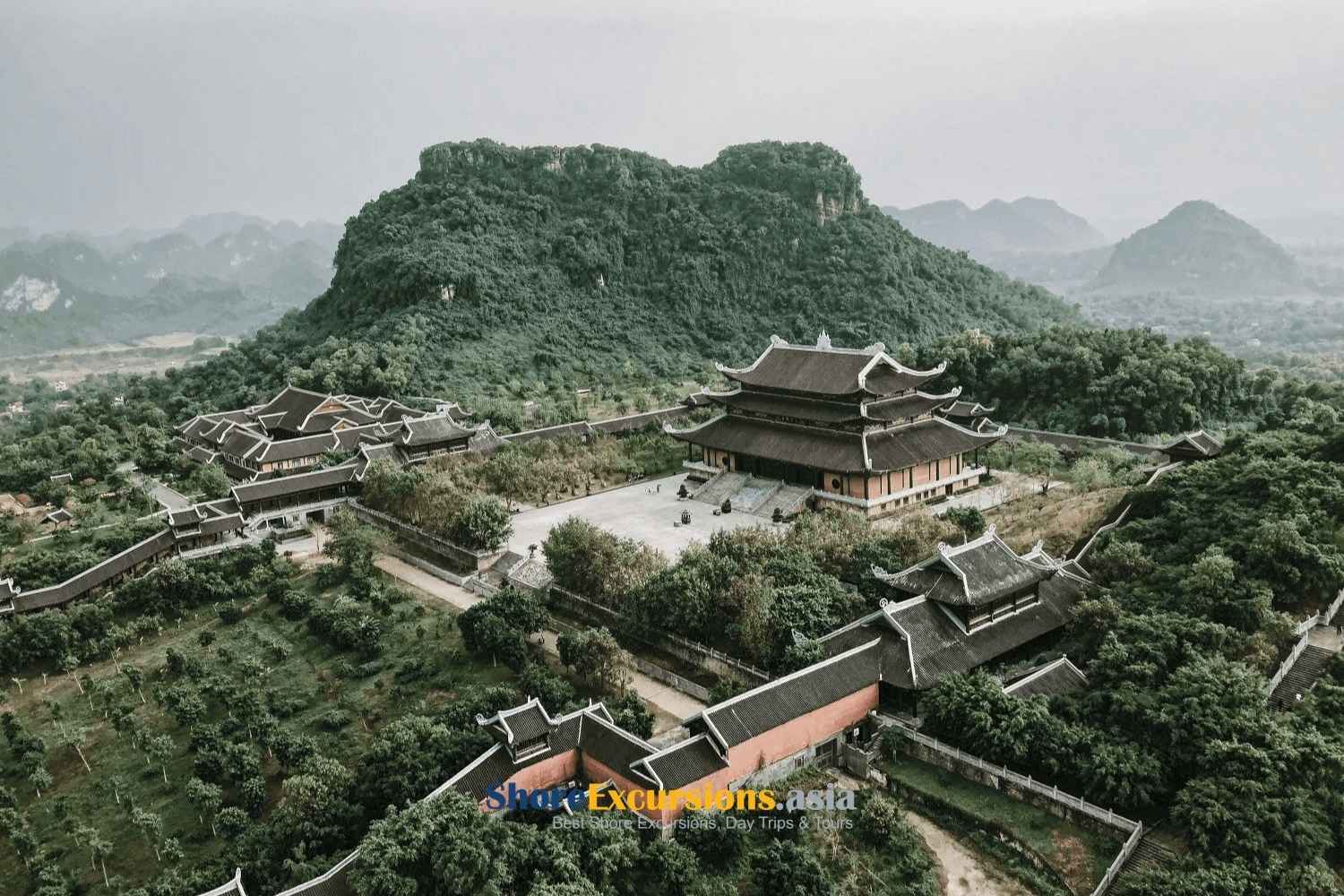
This destination is not only a sightseeing spot. It is also the birthplace of Truc Lam Zen Buddhism, a uniquely Vietnamese school of thought. Visitors on Halong Bay shore excursions often come here to enjoy fresh mountain air and learn about local spiritual traditions. The journey offers a balance between nature, culture, and history.
The pagoda complex includes several temples, ancient paths, and forested landscapes. Each level of the mountain reveals a different perspective. Lower areas feel grounded and calm, while higher provide wide panoramic views. This layered experience makes the visit more engaging and memorable.
Today, Yen Tu pagoda Vietnam attracts both domestic and international travelers. Some visitors come for pilgrimage, while others seek a peaceful escape. The site continues to preserve its cultural identity despite growing tourism.
Quick Information:
- Location: Yen Tu Mountain, Thuong Yen Cong Commune, Uong Bi, Vietnam
- Main highlight: Yen Tu mountain pagoda complex with multiple temples
- Famous site: Dong pagoda Yen Tu at the mountain summit
- Distance from Hanoi: 130 kilometers
- Distance from Halong cruise port: 165 kilometers
- Travel duration: Full-day trip
- Access options: Cable car or hiking
- Cultural importance: Center of Vietnamese Buddhism
The History and Spiritual Significance of Yen Tu
The history of Yen Tu pagoda reflects a deep connection between religion and Vietnamese culture. This sacred mountain has been a center of spiritual practice for centuries. It continues to attract pilgrims and visitors who seek peace and understanding.
The site is closely associated with Tran Nhan Tong, who founded the Truc Lam Zen school here. His journey from emperor to monk shaped the spiritual identity of the region. Today, Yen Tu pagoda Vietnam stands as a symbol of harmony between nature, belief, and history.
The Origin of Truc Lam Zen Buddhism
The development of Yen Tu is closely associated with Tran Nhan Tong. He ruled Vietnam during the Tran Dynasty in the 13th century. He was respected for both his leadership and wisdom. After successfully defending the country against foreign invasions (Mongol – Yuan Empire) in the 13th century, he decided to leave the throne. He chose a life of meditation on Yen Tu mountain. This decision changed the spiritual history of Vietnam.
During his time on the mountain, he founded the Truc Lam Zen school. This Buddhist tradition was influenced by earlier Zen teachings. It also incorporated Vietnamese philosophy and cultural values. The Truc Lam Zen school emphasized simplicity and harmony with nature. It encouraged people to find enlightenment within daily life. This teaching allowed Buddhism to connect closely with local traditions.
Today, many temples in the Yen Tu mountain pagoda complex still preserve this heritage. Visitors can see statues, meditation halls, and ancient relics related to the founder. These sites help explain the origins of Vietnamese Zen Buddhism.
Yen Tu as the “Buddhist Capital” of Vietnam
Over time, Yen Tu pagoda Vietnam became one of the most important Buddhist centers in the country. Many monks studied and practiced meditation in this mountain area. The site gradually developed into a large spiritual complex. Several temples were built at different elevations on the mountain. Each temple represents a step in the spiritual journey. Pilgrims often follow these paths as a symbolic act of devotion.
One of the most sacred locations is Dong pagoda Yen Tu, located near the summit. Reaching this temple is seen as a meaningful spiritual achievement. Many visitors pray here for peace and wisdom. The mountain also hosts an important annual pilgrimage festival. Thousands of people travel to Yen Tu during the spring season. The festival reflects the strong spiritual influence of the site.
Best Time To Visit Yen Tu Pagoda
Yen Tu pagoda Vietnam can be visited throughout the year. Each season offers a different atmosphere and travel experience. Weather conditions and cultural events can influence the quality of your visit. Spring and autumn are generally the most comfortable seasons for Vietnam shore excursions to Yen Tu Pagoda. The temperature is mild, and the mountain scenery looks especially beautiful. Visitors can enjoy both the spiritual sites and the surrounding nature.
Travelers should also consider festival periods and weather conditions. Some months bring large pilgrimages, while others offer a quieter environment.
| Season | Months | Weather Characteristics | Travel Experience | Notes |
|---|---|---|---|---|
| Spring (Festival Season) | Jan – Mar (Lunar calendar) | Mild temperature, light mist in the mountains | Cultural atmosphere with pilgrimages and traditional ceremonies | This is the busiest time at Yen Tu pagoda |
| Summer | May – Aug | Warm and humid, frequent rain showers | Lush green forests and dramatic cloud scenery | Good for nature photography around Yen Tu mountain |
| Autumn | Sep – Nov | Cool air and clear skies | Comfortable weather for hiking and temple visits | One of the best seasons to explore Yen Tu mountain pagoda |
| Winter | Dec – Feb | Cool temperatures and mountain fog | Quiet and peaceful travel atmosphere | Fewer visitors at Dong pagoda Yen Tu |
- Travel tip: Early morning visits often provide the most comfortable temperatures and clearer views of Yen Tu mountain. This timing also helps visitors avoid larger tour groups.
How To Get To Yen Tu Mountain Pagoda?
After arriving at the foot of Yen Tu Mountain, visitors must continue their journey to reach the temple complex. The sacred sites of Yen Tu mountain pagoda are located at different elevations along the mountain. Travelers usually choose between two main options depending on their fitness level and travel preferences.
Cable car
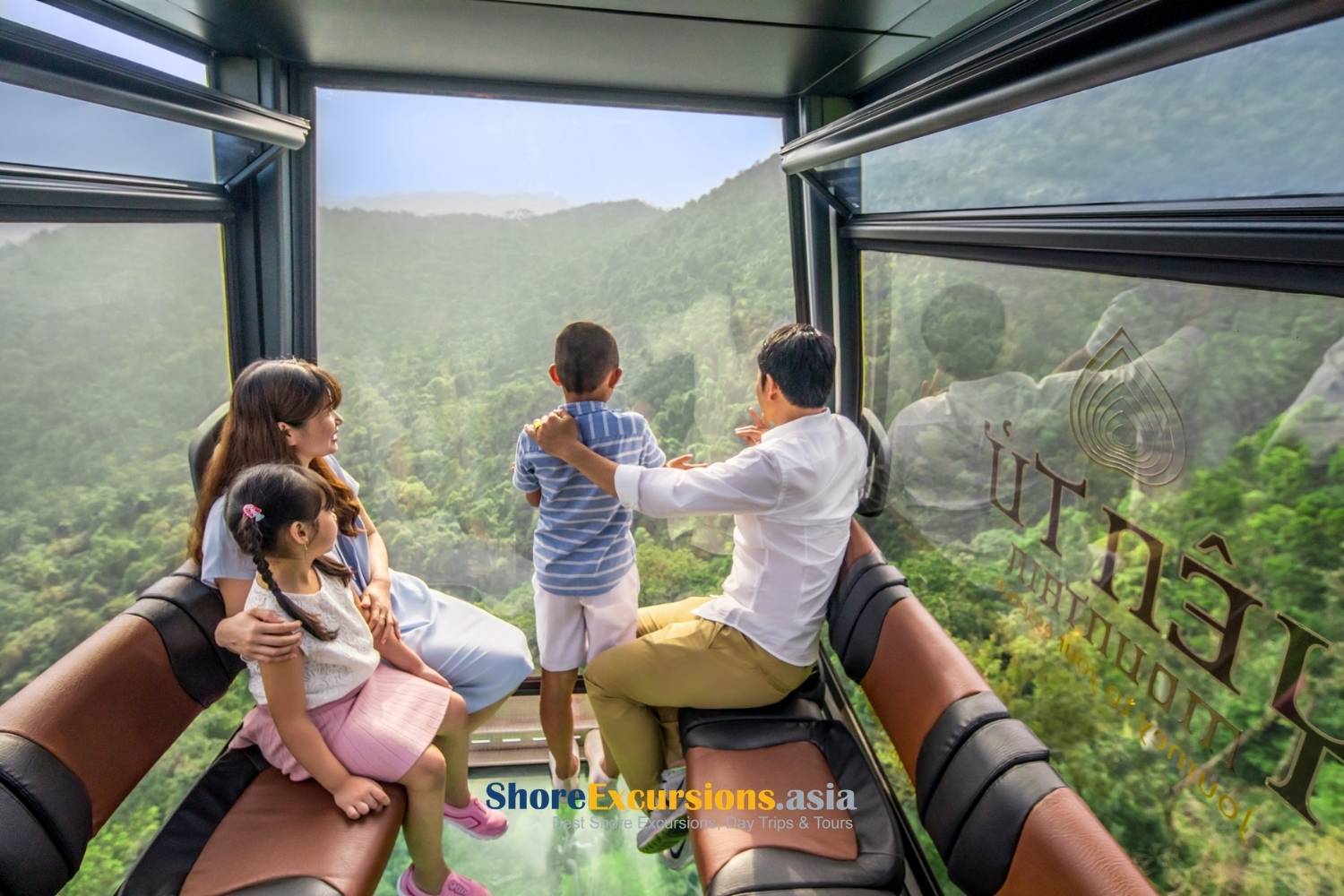
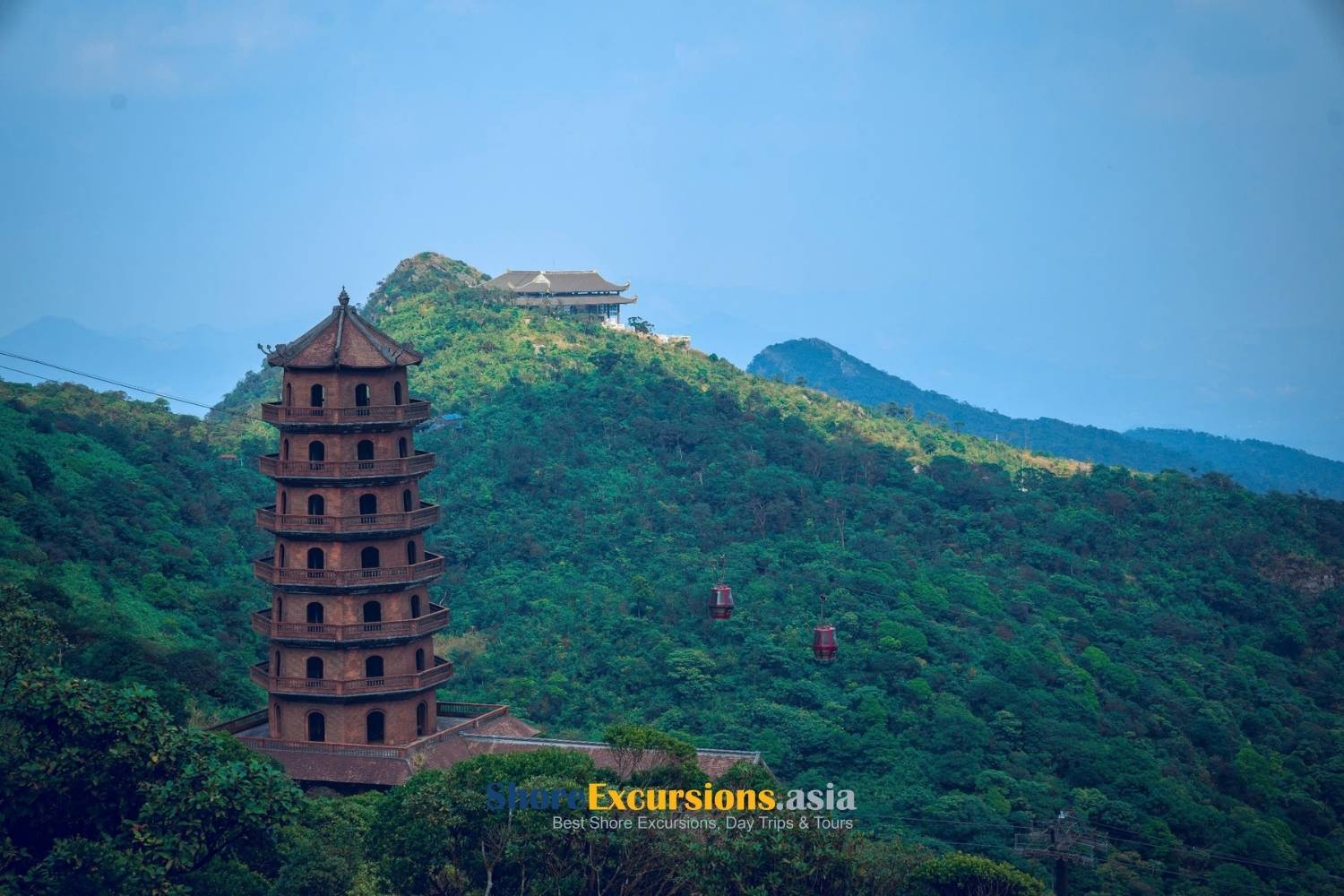
Taking the cable car is the most convenient way to reach the higher areas of Yen Tu pagoda Vietnam. The cable car system helps visitors travel quickly while enjoying wide views of the surrounding mountains. The journey passes over dense forests and winding mountain paths. Passengers can observe the natural landscape from above. The scenery includes bamboo forests, pine trees, and misty hills.
This option is suitable for travelers who prefer a relaxed visit. Families with children or elderly members often choose this method. It allows visitors to save energy while still experiencing the beauty of the mountain. The cable car route is divided into two main sections. Each section brings visitors closer to important temples within the complex. Many travelers combine the cable car ride with short walking routes to explore nearby sites.
Hiking
Hiking is the traditional way to explore Yen Tu mountain pagoda. The full trekking route is about 06 kilometers long. The path passes through forests and historic temple sites. Visitors walk under bamboo groves and pine trees along the mountain trail. The natural environment feels quiet and refreshing. Many travelers enjoy the peaceful atmosphere during the journey.
In recent years, the pathway has been improved with reinforced stone steps. These upgrades make the route safer and easier to follow. Rest areas and small temples also appear along the trail. The hike requires moderate physical effort and several hours of travel. However, many visitors find the experience rewarding. Reaching temples such as Dong pagoda Yen Tu after the climb brings a strong sense of achievement.
Top Attractions in Yen Tu Pagoda Complex
The Yen Tu pagoda complex includes many temples, towers, and sacred landmarks spread across the slopes of Yen Tu Mountain. Each site reflects a different stage in the spiritual journey of pilgrims who travel to this mountain. Visitors can explore a unique combination of religious architecture and natural landscapes.
Dong Pagoda – The Peak of Faith
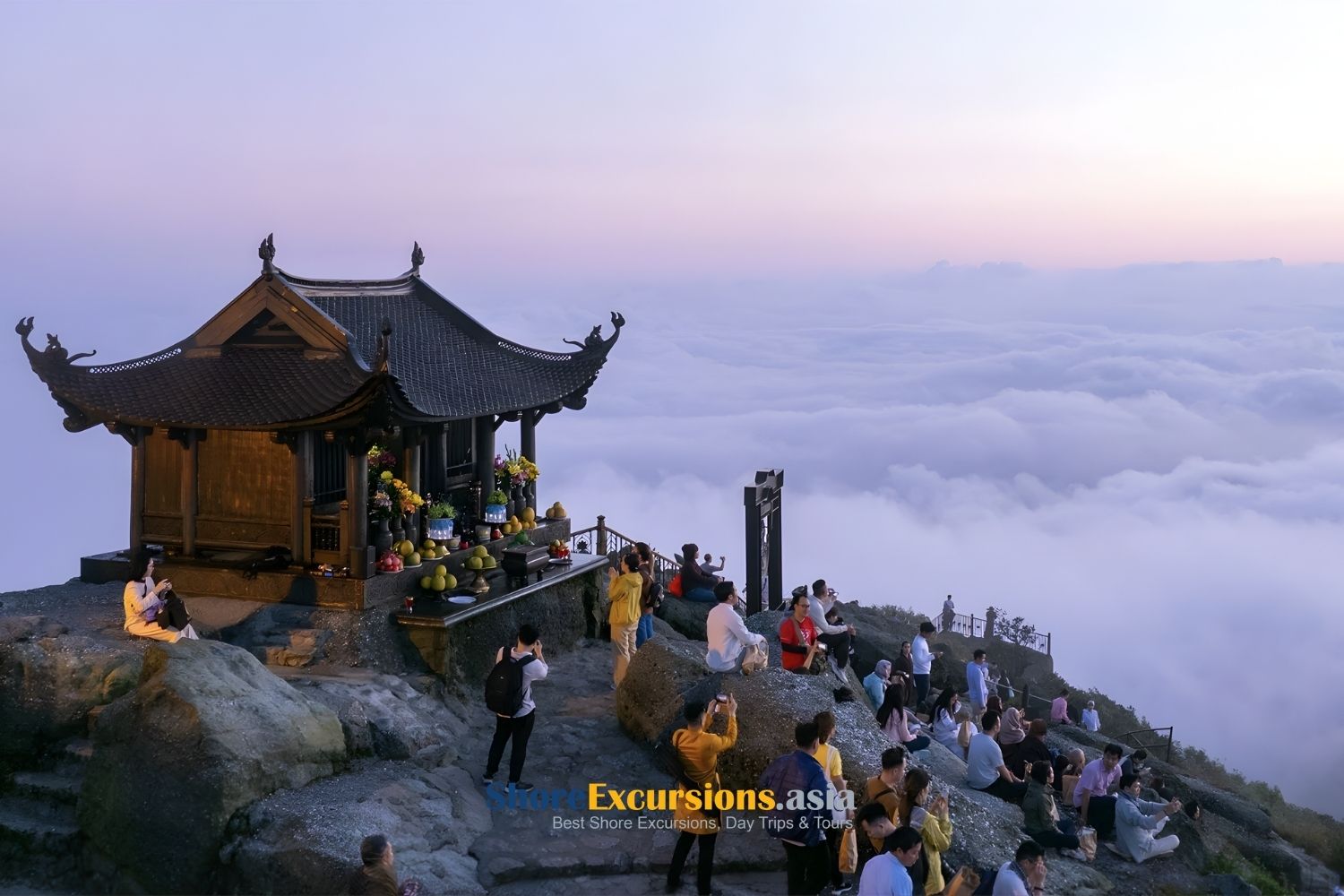
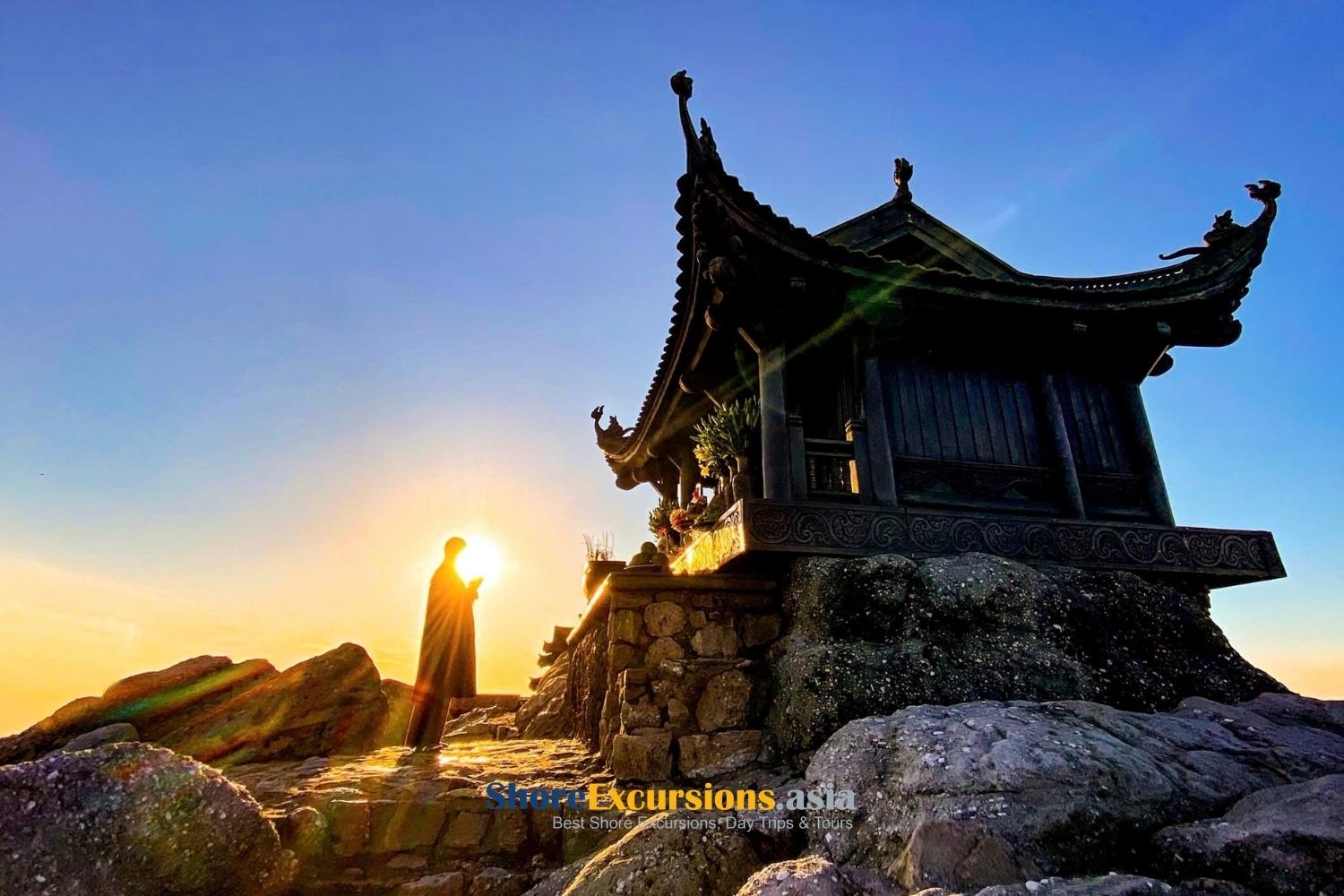
Dong pagoda Yen Tu is the most sacred landmark in the entire Yen Tu mountain pagoda complex. The temple stands near the summit of Yen Tu Mountain at an elevation of about 1,068 meters. This location marks the highest spiritual point of the pilgrimage route.
The pagoda is constructed mainly from bronze, which gives it a distinctive appearance. Despite its modest size, the structure carries great symbolic meaning. Many pilgrims believe that reaching this temple represents the completion of a spiritual journey.
From the summit area, travelers can enjoy panoramic views of the surrounding mountains. On clear days, the landscape stretches across the forests of Quang Ninh province. During early mornings, clouds often drift below the peak, creating a dramatic scene around the temple.
Giai Oan Pagoda & Giai Oan Stream
In your quest to visit Yen Tu Pagoda, you’ve likely heard of Giai Oan Pagoda & Giai Oan Stream. The path leading to Giai Oan Stream features a 10-meter-long blue stone bridge adorned with ancient hues, spanning over a crystal-clear stream. According to legend, this stream served as a place of exoneration and salvation for concubines and beauties from the Tran Dynasty. They chose to end their lives here after failing to persuade their king to return to the court.
Giai Oan Pagoda, also known as Ha Pagoda, stands prominently along your journey to conquer Yen Tu, situated near Trinh Pagoda, Dong Pagoda, Trung Pagoda, and Hoa Yen Pagoda. Upon reaching the temple gate, you’ll encounter six towers, including the resting places of monks Phap Loa and Huyen Quang, along with a tower dedicated to King Tran Nhan Tong.
Tung Street
Continuing on the path towards enlightenment, the journey to Yen Tu Pagoda takes you through the ancient Tung Street, which boasts a history spanning over 700 years. This historic road is flanked by more than 250 ancient pine trees, their robust trunks so large that they cannot be embraced by a single person. These majestic pine trees imbibe the sacred essence of the ancestral land, remaining evergreen and stretching magnificently towards the sacred mountain.
These towering pines provide shelter and respite for pilgrims, monks, nuns, and Buddhists alike, creating a serene atmosphere ideal for exploring the roots of Buddhism in a tranquil and pleasant setting.
Hoa Yen Pagoda
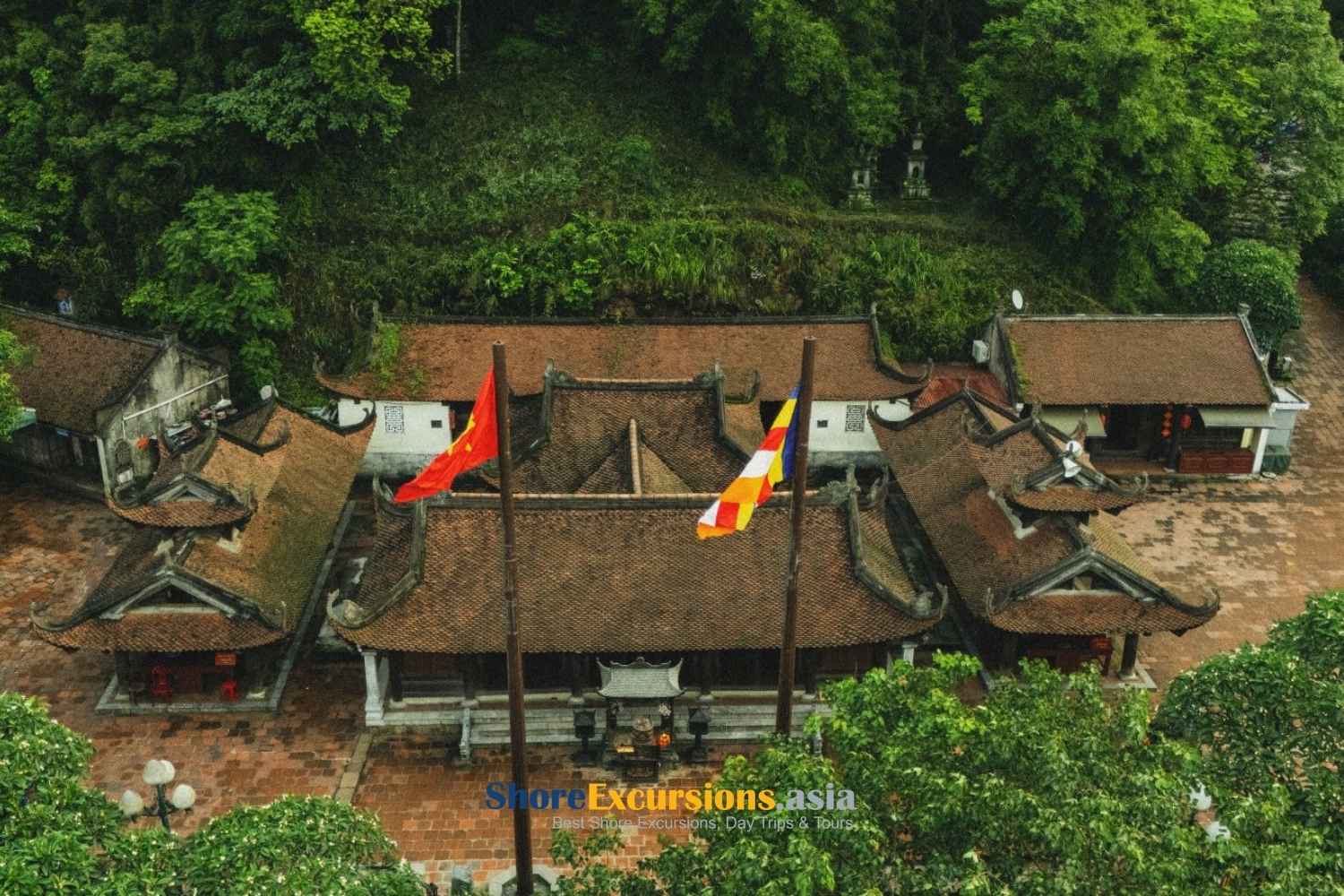
Hoa Yen Pagoda, also known as Ca Pagoda, sits majestically at an elevation of 534 meters, serving as the largest and most revered pagoda in Yen Tu. It holds a central place in the hearts of those embarking on a journey to Yen Tu Pagoda, representing a pivotal destination in their pilgrimage. Originally established during the Ly Dynasty under the name Phu Van, the pagoda underwent name changes throughout history, finally becoming known as Hoa Yen Pagoda during the Le Dynasty.
This exquisitely beautiful pagoda atop Yen Tu mountain once served as a sacred site where the Buddha imparted teachings to monks, nuns, and Buddhists. After ascending thousands of stone steps, visitors reach Hoa Yen Pagoda to marvel at its architecture, which reflects the intricate and elaborate style of the Tran Dynasty. Additionally, nearby stands the Hue Quang To Tower, where relics associated with King Tran Nhan Tong are preserved, adding further historical and spiritual significance to the pilgrimage experience.
Statue Of Buddha Emperor Tran Nhan Tong & An Ky Sinh
Continuing your journey to conquer the experience of going to Yen Tu pagoda, you will see the majestic and decorated statue of Buddha Emperor Tran Nhan Tong built on top of An Ky Sinh peak. The statue weighs up to 138 tons, is 15 m high, and is located in the middle of Yen Tu paradise, extremely eye-catching. Next to the statue of Buddha Emperor Tran Nhan Tong is a statue of a petrified monk (An Ky Sinh) tinged with time, moss, and full of nostalgia. Wearing a dark robe, with both hands respectfully in front of his chest, the statue stands tall and majestic, having experienced 7 decades of many weather impacts in the middle of sacred mountains, and at the same time contains profound meanings that no one can see. it is difficult to become enlightened
Bao Sai Pagoda
Bao Sai Pagoda is the next coordinate when looking for experiences to go to Yen Tu Pagoda. This pagoda named after the first disciple of Buddha Emperor Tran Nhan Tong – Zen Master Bao Sai is located on Yen Tu cliff. After many restorations, Bao Sai Pagoda still retains the intact architecture of the Tran Dynasty at the Patriarch’s house, the main hall as well as its sacred and unique landscape. In particular, Bao Sai Pagoda also has a god altar and an ancient moss-covered sacred well. Along with that is the huge, huge statue of Buddha Emperor Tran Nhan Tong entering Nirvana, extremely eye-catching.
Mot Mai Pagoda and Hidden Temples
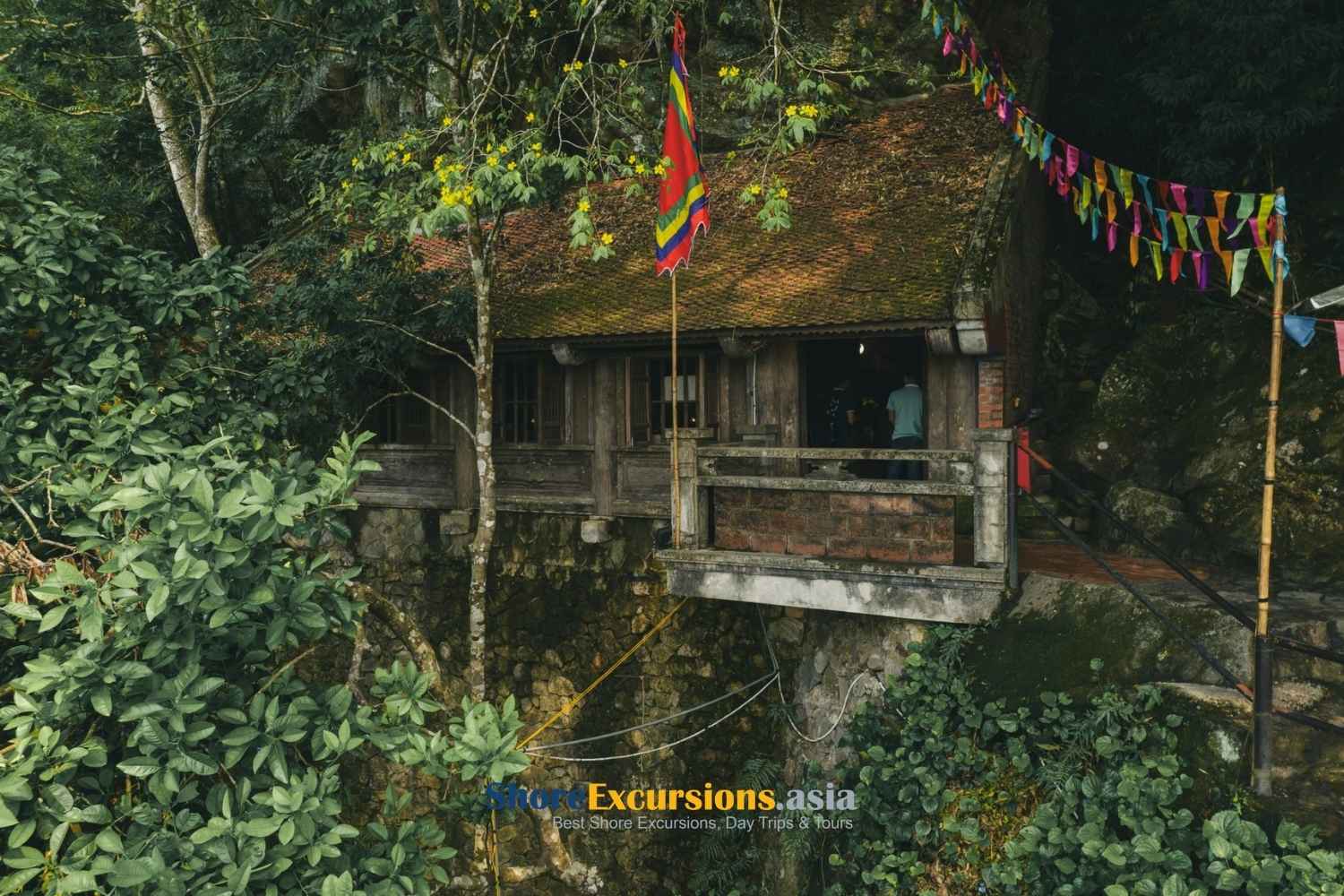
Beyond the major temples, the Yen Tu pagoda complex also includes many smaller shrines and hidden temples. These spiritual sites are scattered along the mountain paths. They often appear quietly among bamboo groves and pine forests.
One of the most unique places is Mot Mai Pagoda. This temple sits on a steep rocky cliff along the pilgrimage route. The structure seems to rest against the mountain wall, which creates a striking visual impression. Mot Mai Pagoda is smaller than the main temples. However, its location makes it memorable for many visitors. The narrow mountain path and surrounding forest create a peaceful setting. Travelers often pause here to rest before continuing their journey.
Along the route, visitors may also encounter other quiet temples and meditation spots. These smaller shrines were built for monks who practiced meditation in the mountains. The atmosphere around them feels calm and undisturbed. Walking through these hidden sites allows visitors to experience a different side of Yen Tu mountain pagoda. The journey becomes more than sightseeing. It becomes a peaceful exploration of nature and spiritual heritage.
Things to Do in Yen Tu Pagoda Quang Ninh Vietnam
A visit to Yen Tu pagoda offers more than a typical sightseeing trip. The mountain combines spiritual heritage, natural scenery, and cultural exploration. Visitors can choose different activities depending on their interests and travel style.
Some travelers focus on temples and Buddhist history. Others enjoy the mountain landscape and peaceful atmosphere. The following experiences highlight the most rewarding things to do at Yen Tu mountain pagoda.
Take the Cable Car for Scenic Mountain Views
The cable car system provides a comfortable way to explore the upper areas of Yen Tu Mountain. Modern cabins travel above dense forests and winding mountain trails. Passengers can observe wide landscapes during the ride.
The journey is divided into two sections. Each section brings visitors closer to important temples in the complex. Many travelers combine the cable car ride with short walking routes between temples. This option allows visitors to enjoy the beauty of Yen Tu pagoda Vietnam without physical strain. It is especially suitable for families and travelers who prefer a relaxed itinerary.
Walk the Historic Pilgrimage Path
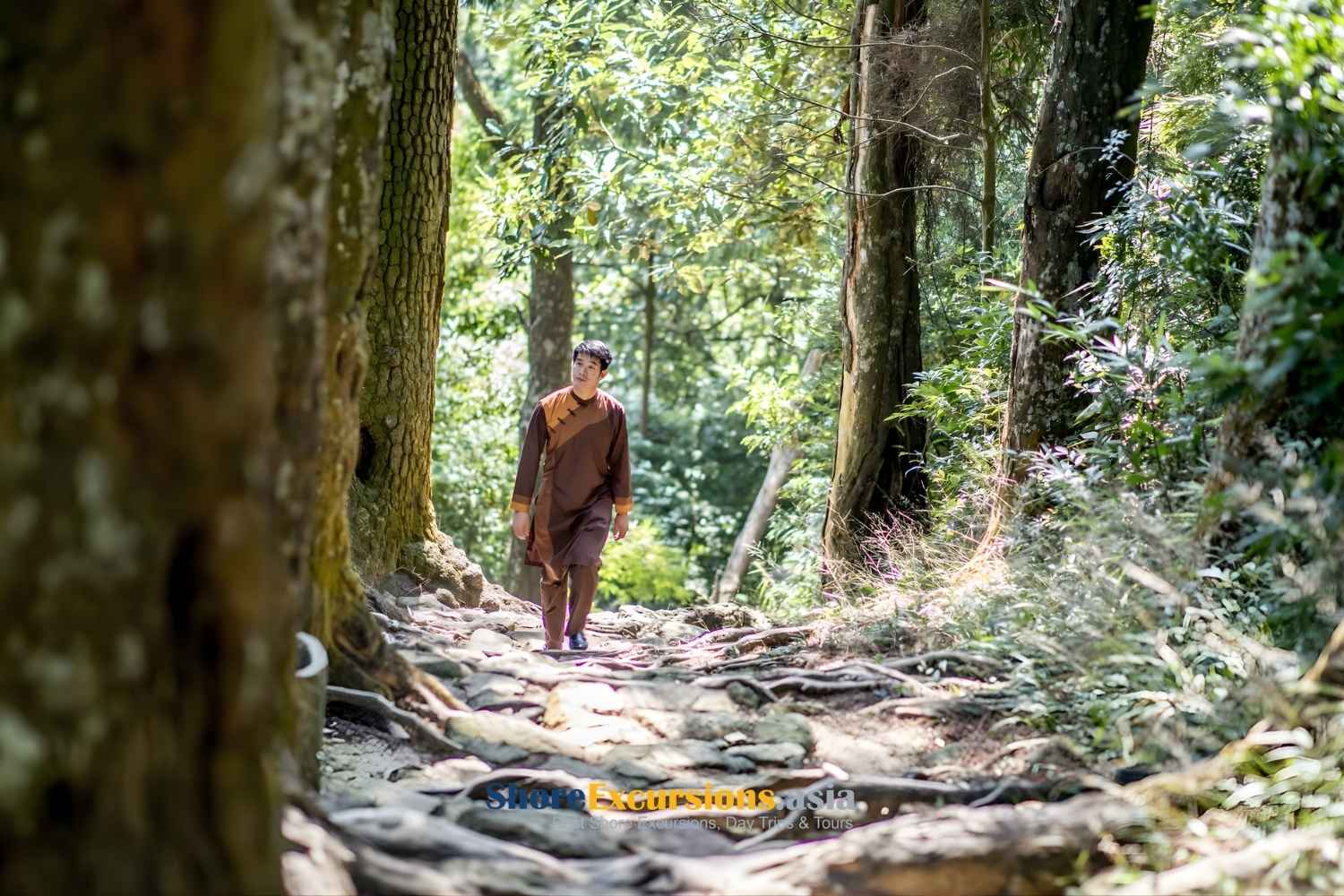
Walking the traditional path is one of the most meaningful experiences on Yen Tu mountain. The ancient route stretches through bamboo forests and pine trees. Stone stairways guide pilgrims toward sacred temples. The journey allows visitors to observe small shrines and meditation spots along the way. The peaceful surroundings help create a reflective atmosphere. Many pilgrims follow this route as part of a spiritual journey.
Today, the pathway has been upgraded with reinforced stone steps. The improved trail makes the route safer while preserving its historical character.
Explore the Sacred Temple Complex
The temples scattered across the mountain represent important stages of Vietnamese Buddhist history. Visitors can explore several spiritual landmarks during their visit. Notable sites include:
- Hoa Yen Pagoda, the central temple of the complex
- Dong pagoda Yen Tu, located near the mountain summit
- Mot Mai Pagoda, built against a rocky cliff
Each temple reveals a different architectural style and cultural story. These places also offer quiet spaces for contemplation.
Capture the Natural Beauty of Yen Tu
Nature is a major highlight of Yen Tu pagoda Vietnam. The mountain landscape includes forests, valleys, and dramatic viewpoints. Visitors often discover beautiful photo locations along the trails. Early morning light creates soft mist around the temples. This scenery produces striking images of the mountain. Photographers especially enjoy viewpoints near the higher temples.
Experience the Peaceful Spiritual Atmosphere
One of the most memorable aspects of Yen Tu mountain pagoda is its calm environment. The mountain has served as a spiritual retreat for centuries. Monks and pilgrims once practiced meditation in these forests. Visitors today can still feel this peaceful atmosphere. Many travelers spend quiet moments near temples or scenic viewpoints. The natural surroundings encourage relaxation and reflection.
| Activity | Experience Type | Recommended Time |
|---|---|---|
| Cable car ride | Scenic and relaxing | 20 – 30 minutes |
| Hiking pilgrimage path | Active and cultural | 2 – 4 hours |
| Visiting temples | Cultural and spiritual | 1 – 2 hours |
| Photography | Nature and landscape | Early morning or sunset |
| Meditation and relaxation | Quiet reflection | Anytime during the visit |
Useful Tips When Visiting Yen Tu Pagoda
- For an ideal visit to Yen Tu, plan for a day and night stay, or opt for a day trip.
- Expect bustling crowds during the Yen Tu festival for a vibrant experience. Weekdays offer a quieter and more serene atmosphere.
- If hiking up Yen Tu mountain, wear sturdy sports or hiking shoes, and dress appropriately for the weather with lightweight clothing. Carry a compact backpack for snacks, water, and personal items. Due to limited ATM access and potential for pickpocketing, bring sufficient cash.
- Purchase a bamboo cane at the mountain base (costing 5,000 VNĐ) for added stability and stamina during the ascent to the summit. Capture memorable moments with a camera or phone along the way.
- Transport options include buses or private cars. Buses depart primarily from Luong Yen and My Dinh stations. For private vehicles, ensure to plan your route meticulously and pack essentials.
- Respectful attire is essential at Yen Tu Pagoda, a sacred site. Maintain proper decorum, refrain from littering, and preserve the natural surroundings.
- If feeling fatigued during the journey, take breaks to rest, hydrate, and rejuvenate before continuing.
Yen Tu Pagoda offers a sacred and tranquil setting, especially during the early days of the new year. I hope these tips assist you, your family, and friends on your upcoming visit. Exploring Yen Tu in Halong Bay shore excursions is not just a pilgrimage; it’s an ideal spring excursion for all, whether with loved ones or colleagues, as the New Year begins.