

If the ship sails without you, find the cruise line’s port agent or port staff, who usually hold your passport and can contact the vessel. Call the emergency number in your daily, then choose between rejoining at a later port or flying home. You cover the extra costs unless a ship-run tour caused the delay.
Missing the ship is rarer than the horror stories suggest, but Vietnam makes it easier than many destinations. The best day trips often sit one to three hours from the gangway, and highway traffic can rewrite a schedule within minutes. This guide from Vietnam Shore Excursions covers what happens at the pier, what to do in the first hour, how rejoining works from Vietnamese ports, and how to avoid the problem in the first place.
What Happens When the Ship Sails Without You
Cruise lines do not leave the moment a passenger runs late, and crews normally try to account for missing guests before the gangway is raised. Once it is clear that someone is not coming back, security staff usually collect the passport from the cabin, sometimes with medication and phones, and give them to the ship’s local port agent. The ship then departs on schedule, because a delay would affect pilot slots and arrival times at every later port. Cruise Critic and The Points Guy both describe this same sequence.
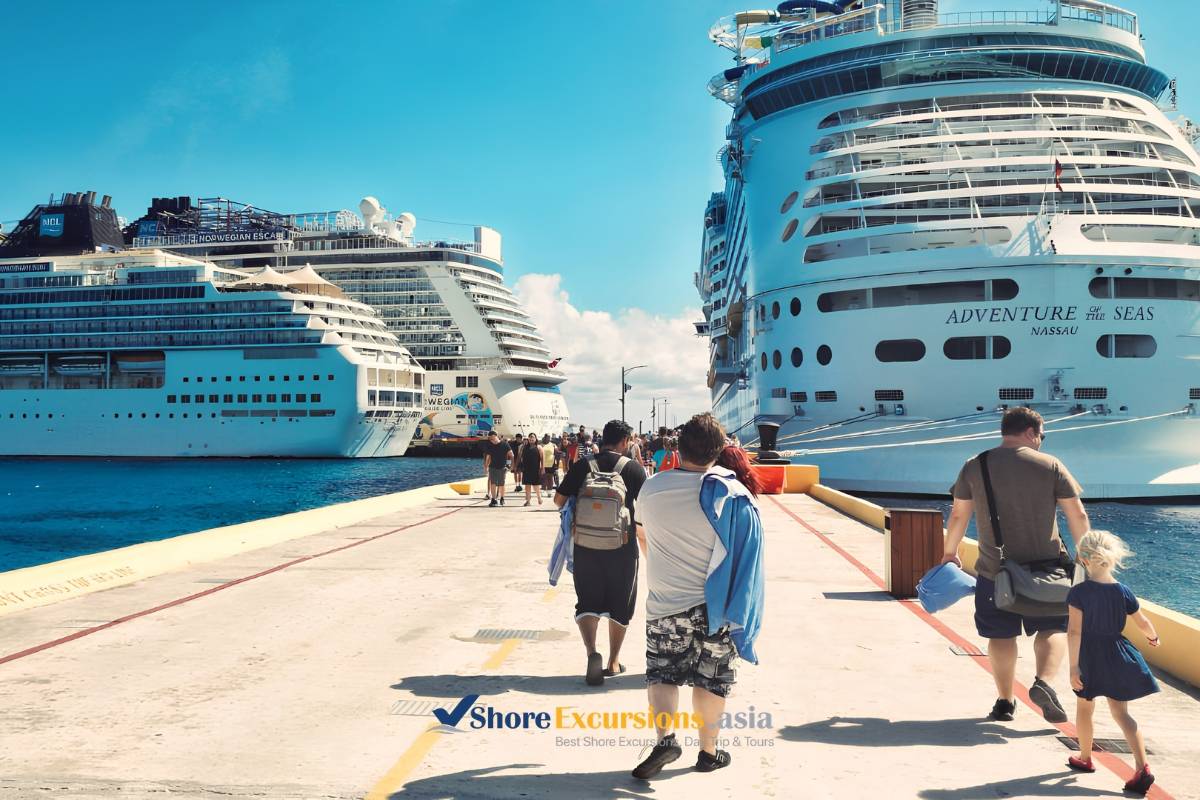
In Vietnam the handover matters even more, since the ship often holds passports during immigration clearance. Our guide to the Vietnam visa for cruise passengers explains how landing cards and ship-held passports work. If your passport never reached the agent, your embassy or consulate is the next call.
What to Do in the First Hour of Missing Ship
The first sixty minutes decide how smoothly the rest goes, so work through the steps in order. Seats on flights and road transfers disappear quickly, and every hour you lose narrows your options for reaching the ship. Stay calm, and avoid buying tickets before you have spoken to the cruise line.
- Find the port agent. Their name and number are normally printed in the daily planner or on the port map. If you cannot find them, ask terminal staff or call the cruise line’s customer service.
- Call the ship. Give your exact location and ask what the cruise line will allow next.
- Collect your passport and belongings from the agent, and check that nothing essential is missing.
- Call your insurer’s 24-hour assistance line before you pay for transport or a hotel.
- Keep every receipt, because any reimbursement depends on documentation.
Can You Rejoin the Ship From a Vietnamese Port?
Sometimes you can, but the answer depends on what the itinerary does next. Some Vietnam calls are followed by another Vietnamese port the next day, while others lead to sea days before Hong Kong, Singapore or Thailand. To rejoin, you need a flight or road transfer that gets you there before the ship sails, plus a visa if the next country requires one.
The distance between the gangway and your destination is what turns a late return into a missed ship. The table shows where that risk concentrates at the main cruise ports.
| Cruise Port | Common day trip destinations | Why a late return is risky |
| Phu My – Ho Chi Minh City | Ho Chi Minh City, Vung Tau, Mekong Delta, Cu Chi Tunnels | Long highway transfer, plus a walk of roughly 700 m to 1 km from gangway to gate |
| Cam Ranh – Nha Trang | Nha Trang | A similar gangway-to-gate walk before the road transfer even starts |
| Tien Sa – Da Nang | Da Nang, Hoi An, Hue | Hoi An is about an hour away, and evening traffic builds up |
| Chan May – Hue | Hue, Hoi An, Da Nang | Hoi An is about an hour away, and evening traffic builds up |
| Ha Long | Ha Long, Ha Noi | Hanoi is roughly 2.5 to 3 hours each way |
Our Da Nang port guide and Ha Long port guide show terminal layouts and typical travel times, and the overview of Vietnam cruise ports covers the rest.
Who Pays for Your Late: Ship Tour, Independent Trip or Private Operator
The way you booked your day decides who carries the risk when it runs late. The comparison below summarizes the usual position, although each cruise line sets its own terms.
| How you book | If you return late | Trade off |
| Ship-sponsored tour | The ship usually waits, or the cruise line arranges travel to the next port | Safest on cost, but groups are larger and itineraries are fixed |
| Independent (taxi or your own plan) | The ship does not wait, and you pay for everything | Most flexible, with the highest risk |
| Private operator (such as Vietnam Shore Excursions) | Depends on the operator’s written policy | Read the policy before you pay |
Ours plans the return at least 90 minutes before departure and reimburses reasonable costs only when our own error causes a missed ship. It does not cover traffic, weather or port decisions, and it does not make the ship wait. You can read the full terms in the Back-to-ship Guarantee and judge any operator by the same questions.
What a Missed Ship Really Costs
Costs vary from case to case, but the main items are predictable. Knowing them in advance helps you decide whether a tight plan is worth the risk. Most travelers meet at least three of the following.
- Last-minute flights or road transfers to rejoin the ship or get home
- One or two hotel nights while arrangements are made
- Shipping of belongings left in your cabin, if you end the cruise
- No refund for the days you miss
- Visa or entry costs if the next port is in another country
Travel insurance can soften the blow, but the wording matters. Some policies pay for a missed departure only when a covered event causes it, such as a vehicle breakdown or an accident, and they may exclude simple lateness. Check your policy before you sail, and call the insurer before you spend money.
How to Avoid Missing the Ship in Vietnamese Ports

Prevention costs far less than recovery, and most of it comes down to planning backward from departure. These habits mirror how local operators build a port day. Each one takes only a few minutes to apply.
- Work from all-aboard, not departure. The gangway often closes well before the ship sails.
- Check which clock the ship uses. Vietnam stays on UTC+7 all year, but ship time can differ, so confirm it in the daily planner.
- Plan a buffer of at least 90 minutes on any trip with a long drive each way.
- Photograph the port agent and ship numbers, and carry your cruise card and a charged phone with data.
- Skip unplanned stops on the way back. Extra shopping or photo stops quietly eat the buffer.
- Watch the weather. Heavy rain in central Vietnam can slow roads and close sections of them.
Common Mistakes Leading to Miss the Ship
The same few appear again and again among passengers who get stuck. None of them is dramatic on its own. Together they turn a delay into a missed sailing.
- Assuming the ship will wait for an independent plan
- Booking a day trip whose round-trip drive uses most of the port call
- Buying flights before speaking to the ship or the insurer
- Leaving ID and contact numbers in the cabin
Frequently Asked Questions
Will the ship wait for me in Vietnam?
Usually only for ship-sponsored tours that run late. If you travel independently, the ship sails on schedule, whatever the reason for your delay. Treat the all-aboard time as final.
Where is my passport if I miss the ship?
Typically with the port agent, because crews hand it over when a passenger is missing. In Vietnam the ship may also have held it for immigration clearance. If the agent does not have it, contact your embassy or consulate.
Can I catch the ship at the next port?
Often, if the cruise line agrees and you can reach the port before departure. The outcome depends on the route, flight availability and visa rules. Ask the ship and the port agent before you book anything.
Does travel insurance cover a missed cruise ship?
Some policies do, but usually only for covered causes such as an accident or a breakdown. Others exclude simple lateness. Read the wording and call the assistance line before you pay for anything.
Before You Step Off the Ship
Take a photo of the port agent’s number, agree a firm return time with your guide or driver, and compare the all-aboard time with the ship clock. If your day involves a long drive, the Vietnam travel guide for cruise passengers can help you pick an itinerary that fits your port call. When you want a day planned around your sailing time, a local team can design Vietnam shore excursions with the return leg fixed first. Either way, the safest plan leaves room for a bad day on the road.


 Send Inquiry