
Overlooking the peaceful Perfume River, Thien Mu Pagoda is one of Hue’s most recognizable landmarks and an important symbol of Vietnam’s Buddhist heritage. Founded in 1601, this historic temple is known for its elegant seven-story tower, traditional architecture, and tranquil setting on Ha Khe Hill. It offers visitors a glimpse into the spiritual traditions and royal history that have shaped the former imperial capital.
Whether you are exploring Hue independently or joining a Hue shore excursion from Chan May Port, Thien Mu Pagoda is a worthwhile stop for understanding the city’s cultural identity. This guide covers the pagoda’s history, architectural highlights, practical visitor information, and tips for including it in your Hue sightseeing itinerary.
Thien Mu Pagoda at a Glance
- Location: Ha Khe Hill, Kim Long area, Hue, Vietnam
- Also known as: Linh Mu Pagoda or the Pagoda of the Celestial Lady
- Founded: 1601, under Nguyen Hoang
- Main landmark: Phuoc Duyen Tower, a seven-story structure approximately 21 meters high
- Setting: Overlooking the Perfume River
- Recommended visit duration: Approximately 45 – 60 minutes
- Best for: History, Buddhist culture, traditional architecture, and photography
- Entrance fee: Generally free, although visitors should confirm current policies before arriving
Thien Mu Pagoda is approximately 4 – 5 kilometers from central Hue, making it easy to combine with other city attractions. Visitors can reach it by car, taxi, motorbike, or a boat trip along the Perfume River.
The History and Legend of Thien Mu Pagoda
The Legend of the Celestial Lady
The name Thien Mu translates roughly as “Celestial Lady” and is associated with a local legend about an elderly woman who appeared on Ha Khe Hill. According to the story, she foretold that a powerful ruler would establish a pagoda on the site to bring prosperity to the region.
When Nguyen Hoang, the ruler of the southern Vietnamese territories, visited the area, he heard the story and ordered a pagoda to be built. The legend became closely connected with the temple’s identity and explains why the site has long held a special place in Hue’s cultural imagination.
Although the story is part of local tradition rather than independently verified history, it reflects the spiritual beliefs and political ambitions surrounding the early development of the Nguyen lords’ territories.
Founded in 1601 Under Nguyen Hoang
Thien Mu Pagoda was established in 1601, during a formative period in the history of central Vietnam. Nguyen Hoang sought to consolidate his authority in the region, and the construction of religious institutions helped strengthen the cultural and spiritual foundations of his rule.
Over subsequent centuries, the pagoda received royal patronage and underwent several restorations. Nguyen Phuc Tan ordered repairs in 1665, while Nguyen Phuc Chu commissioned a monumental bronze bell in 1710 and a commemorative stone stele in 1715. These additions helped transform the pagoda into an important religious and historical landmark.
Thien Mu Pagoda Through the Centuries
The temple continued to develop under later rulers of the Nguyen dynasty. In the nineteenth century, Emperor Thieu Tri commissioned Phuoc Duyen Tower, which remains the pagoda’s most recognizable feature.
Today, Thien Mu Pagoda represents more than four centuries of religious practice, architectural change, and regional history. It also forms part of the broader cultural landscape associated with Hue’s former imperial capital.
What to See at Thien Mu Pagoda
Phuoc Duyen Tower: The Pagoda’s Iconic Landmark
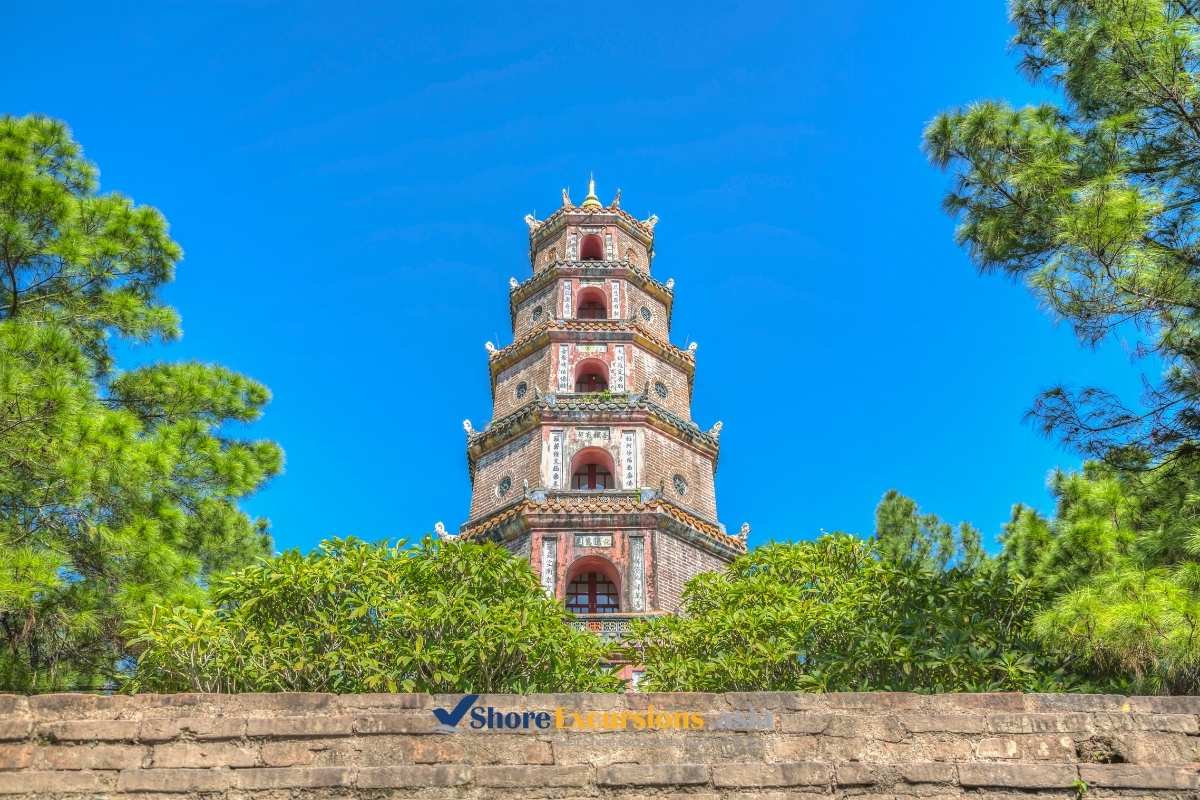
Phuoc Duyen Tower is the most photographed structure at Thien Mu Pagoda. Built between 1844 and 1846 under Emperor Thieu Tri, the approximately 21-meter tower features seven octagonal levels and a distinctive traditional design.
Each level is associated with Buddhist religious symbolism, and the tower stands prominently near the entrance to the temple grounds. Its proportions, brickwork, and placement against the surrounding greenery make it a defining feature of Hue’s skyline.
Take time to appreciate the tower from different viewpoints rather than photographing it only from directly in front. The surrounding courtyard and the elevated position above the Perfume River provide attractive perspectives, particularly in softer morning or late-afternoon light.
Dai Hung Shrine: The Spiritual Heart of the Pagoda
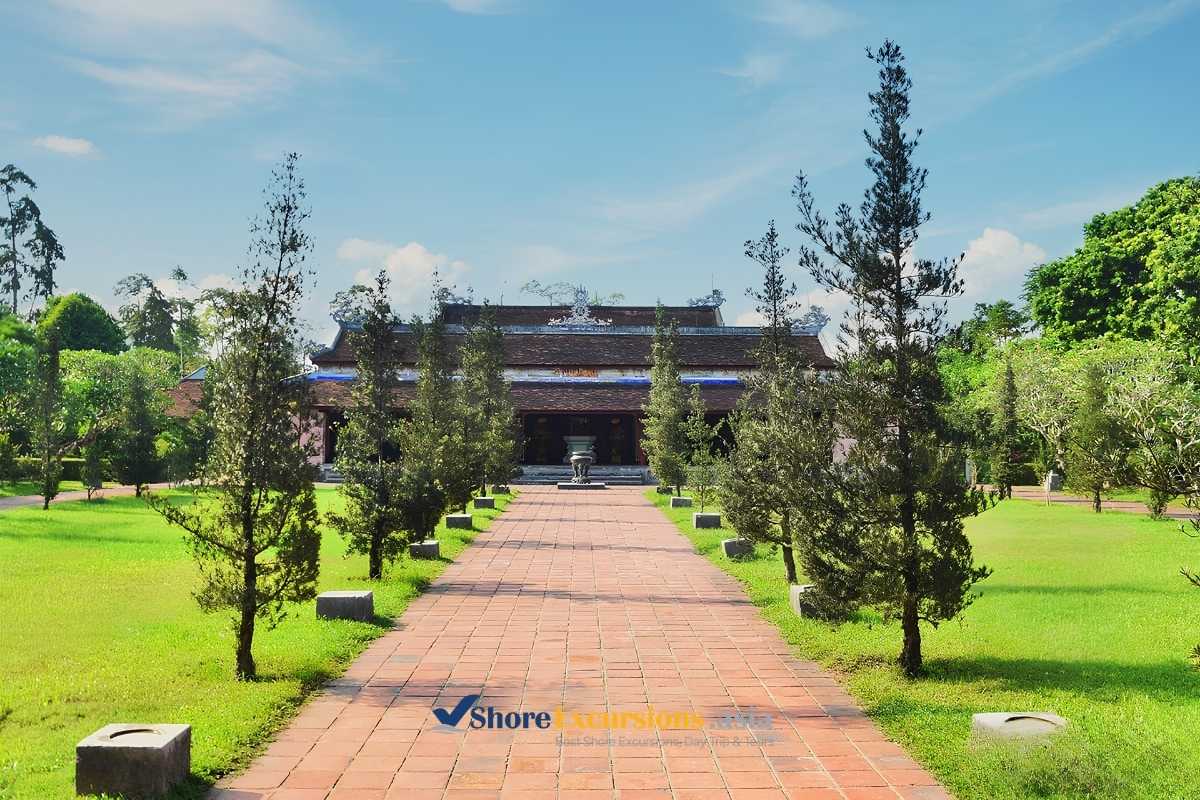
Dai Hung Shrine is the principal worship hall within the pagoda complex. Its traditional architecture, religious statues, and decorative details reflect the influence of Vietnamese Buddhist traditions and royal patronage.
Visitors can observe the temple’s spiritual atmosphere and learn how Buddhist practices remain part of everyday life in Hue. As this is an active place of worship, it is important to speak quietly, dress respectfully, and avoid interrupting ceremonies or people engaged in prayer.
The Great Bell and Historic Stone Stele
Two other important features are the Great Bell (Dai Hong Chung), cast in 1710, and the stone stele commissioned in 1715. The bell is a remarkable example of historic metalwork, while the stele records information associated with the pagoda’s royal history.
The stele rests on a carved stone turtle, a traditional symbol associated with longevity and the preservation of knowledge. Together, these objects provide insight into the craftsmanship, religious devotion, and political patronage that shaped the temple.
The Historic Austin Car
Thien Mu Pagoda also preserves an Austin car associated with Buddhist monk Thich Quang Duc and the events of 1963. The vehicle was used to transport him to Saigon, where he carried out his self-immolation in protest against the South Vietnamese government’s treatment of Buddhists.
The event became an internationally recognized moment in modern Vietnamese history. The car provides a tangible connection to that period and adds a more recent historical dimension to the pagoda’s centuries-old story.
Peaceful Gardens and Riverside Views
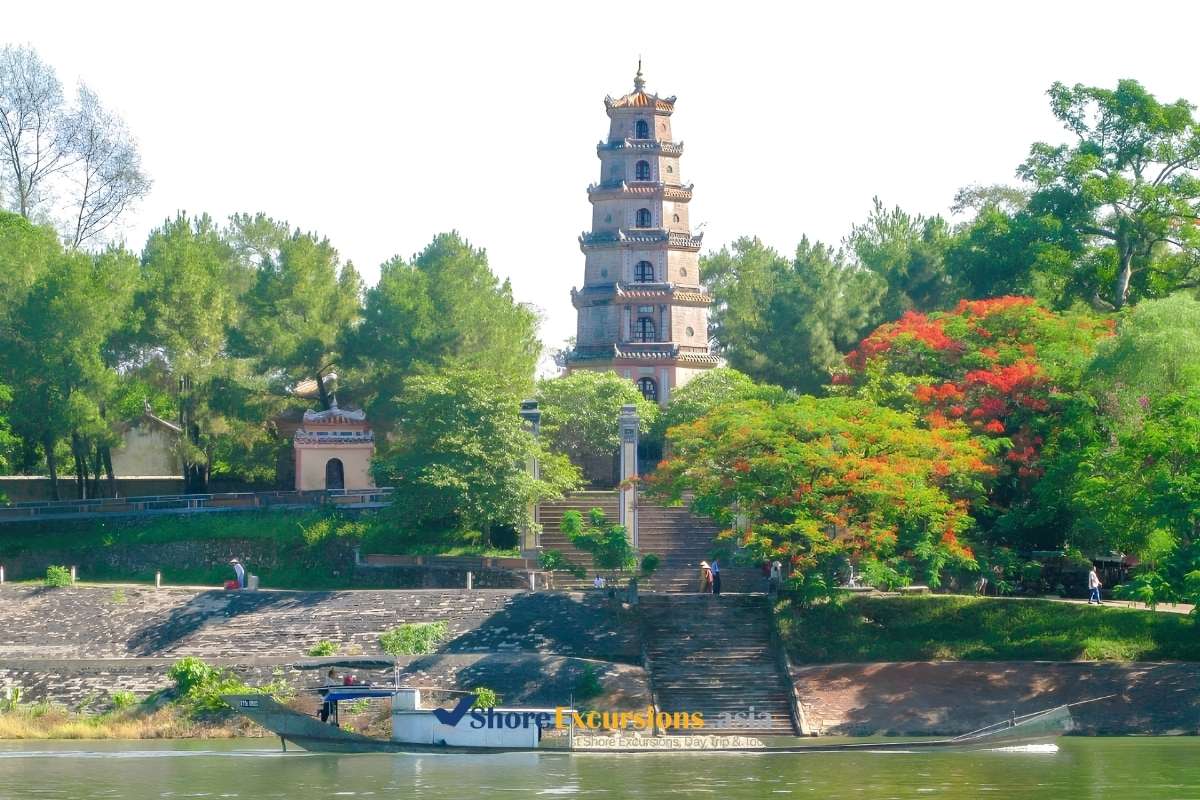
Beyond its historic structures, the pagoda offers shaded paths, mature trees, and quiet spaces overlooking the Perfume River. These surroundings provide a welcome contrast to the busier streets of central Hue.
Allow a little time to enjoy the atmosphere instead of rushing from one landmark to another. The combination of religious architecture, greenery, and river scenery is a major part of what makes Thien Mu Pagoda memorable.
Where Is Thien Mu Pagoda and How Do You Get There?
Thien Mu Pagoda stands on Ha Khe Hill on the northern bank of the Perfume River, approximately 4–5 kilometers west of central Hue.
- By taxi or private car: This is a convenient option for independent travelers and visitors following a sightseeing itinerary. Travel time depends on the pickup point and traffic.
- By motorbike: Travelers comfortable with local traffic can reach the pagoda independently. Wear a helmet and check parking arrangements before leaving your vehicle.
- By dragon boat: A boat trip along the Perfume River offers a scenic alternative to traveling by road. Depending on the service, visitors may be able to arrange a stop near the pagoda. Confirm the route, duration, and return arrangements with the operator beforehand.
Getting to Thien Mu Pagoda from Chan May Port
Cruise passengers arriving at Chan May Port can include Thien Mu Pagoda in a day trip to Hue. The port is roughly 65 – 75 kilometers from the city, depending on the route and destination, and the road journey commonly takes around 1.5 – 2 hours each way.
Because travel time can vary, it is important to plan the visit around the ship’s arrival and departure schedule. A private vehicle or organized Hue Shore Excursion can simplify transportation and help coordinate multiple stops. For a smoother day ashore, consider combining the pagoda with Hue Imperial City and one nearby royal tomb rather than trying to visit every major attraction.
Best Time to Visit Thien Mu Pagoda
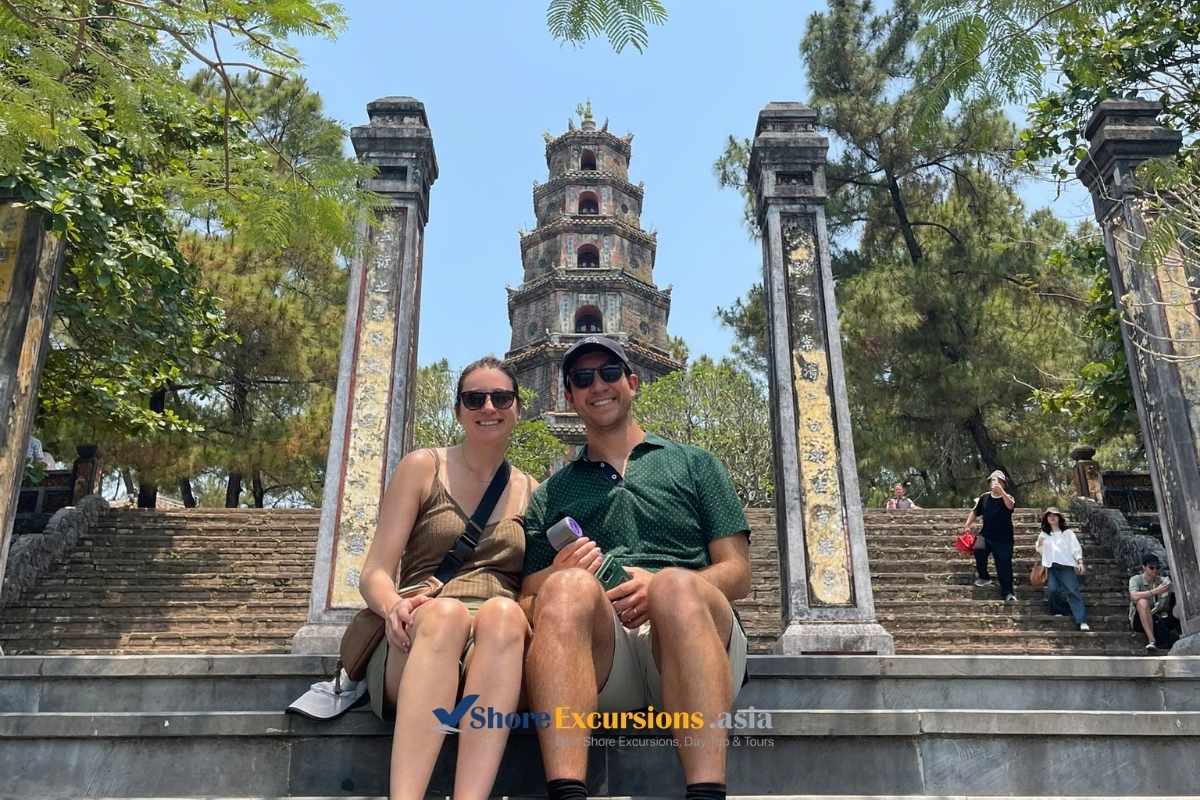
The best time to visit Thien Mu Pagoda is generally from February to April, when Hue tends to experience more favorable conditions for sightseeing. For the most comfortable experience, plan your visit in the early morning or late afternoon, when temperatures are usually more manageable and the light is ideal for photographing the pagoda’s historic architecture and the Perfume River.
Best Season to Visit the Pagoda of the Celestial Lady
Thien Mu Pagoda is commonly listed as open daily from 5:00 AM to 6:00 PM, although visitors should confirm current opening hours before their visit.
- 7:00 – 9:00 AM: One of the best windows for a peaceful visit. The weather is often cooler than at midday, making it more comfortable to explore the temple grounds, admire Phuoc Duyen Tower, and take photographs.
- 9:00 – 11:00 AM: A practical alternative for travelers following a morning sightseeing itinerary. Temperatures may begin to rise during warmer months, so bring water and sun protection.
- 3:30 – 5:00 PM: A good option for enjoying softer afternoon light and views over the Perfume River. Arrive early enough to explore the main areas before closing time.
Best Months to Visit Thien Mu Pagoda
- February to April: The best overall period. These months generally offer favorable conditions for exploring Hue’s outdoor attractions. March is particularly worth considering for travelers who want to explore the pagoda and other historic sites in one day.
- May to August: Good for sightseeing, but prepare for heat. If visiting during this period, prioritize early-morning sightseeing, wear breathable clothing, and carry drinking water. Late afternoon can also work well, provided there is enough time before closing.
- September to November: Plan carefully around rainfall. Flooding and severe weather can occasionally disrupt transport and sightseeing. Check the forecast before your visit and remain flexible if traveling during this period.
- December to January: Cooler, potentially wet conditions. These months can suit travelers who prefer a quieter atmosphere, but a rain jacket and flexible itinerary are advisable.
Thien Mu Pagoda Entrance Fee, Opening Hours, and Visitor Etiquette
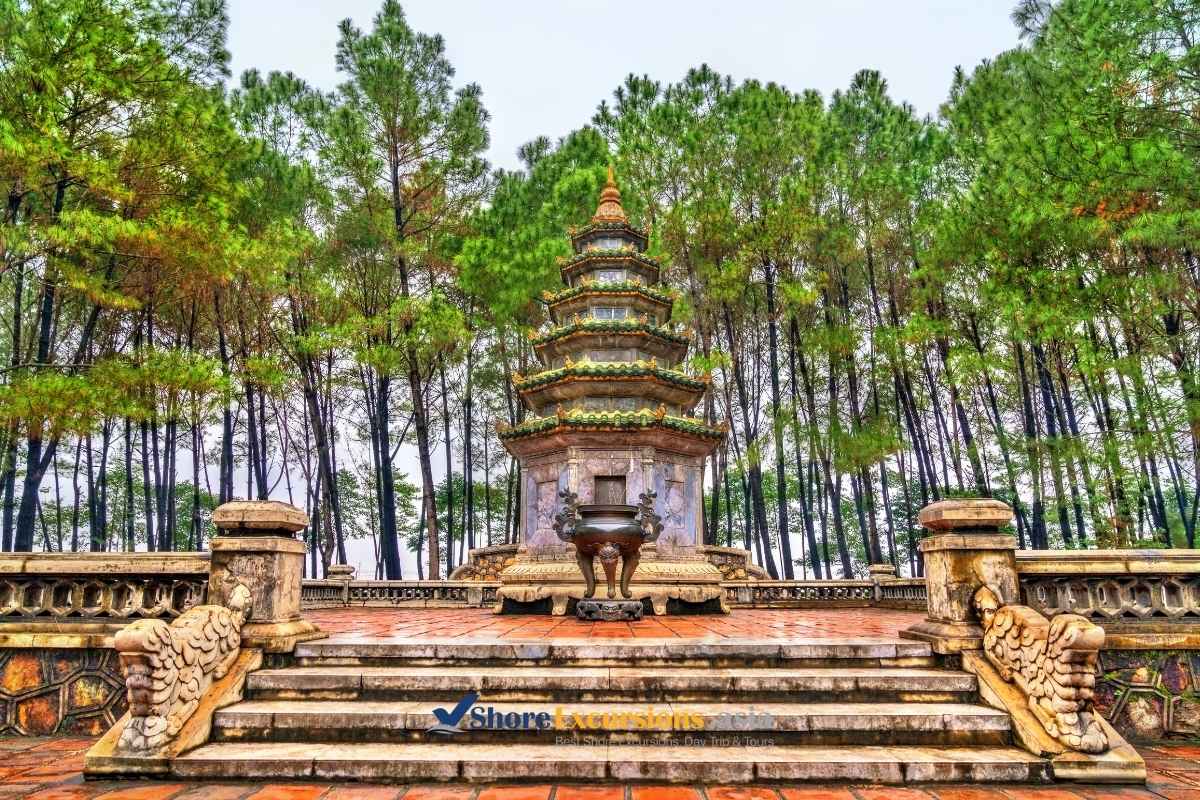
Thien Mu Pagoda Entrance Fee and Opening Hours
- Entrance fee: Free.
- Opening hours: 6:00 AM – 6:00 PM.
- Recommended visit duration: 45 – 60 minutes.
- Best time to arrive: 7:30 – 8:30 AM for cooler temperatures and a quieter atmosphere.
Good to know: Opening hours and access arrangements may change during religious festivals or special events. Some buildings and worship areas may also be closed to visitors.
What Should You Wear when Visiting Thien Mu Pagoda
Visitors should choose modest clothing that covers their shoulders and knees when visiting Thien Mu Pagoda, as it is an active Buddhist religious site. Comfortable walking shoes are also recommended because the pagoda grounds include steps, uneven paths, and areas that may require some walking.
When entering worship halls or other sacred spaces, visitors should speak quietly and follow any instructions displayed on site. If you wish to photograph local people, you should ask for their permission first. You should also respect photography restrictions and avoid taking pictures during religious ceremonies if doing so could disturb worshippers or interrupt their practices.
Practical Tips for First-Time Visitors
- Allow approximately 45 – 60 minutes for a relaxed visit.
- Bring water, sun protection, and rain protection when appropriate.
- Follow signs and avoid entering restricted areas.
- Be mindful of worshippers and the daily routines of the temple.
- If you have limited mobility, check accessibility arrangements in advance.
Visiting Thien Mu Pagoda on a Hue Shore Excursion
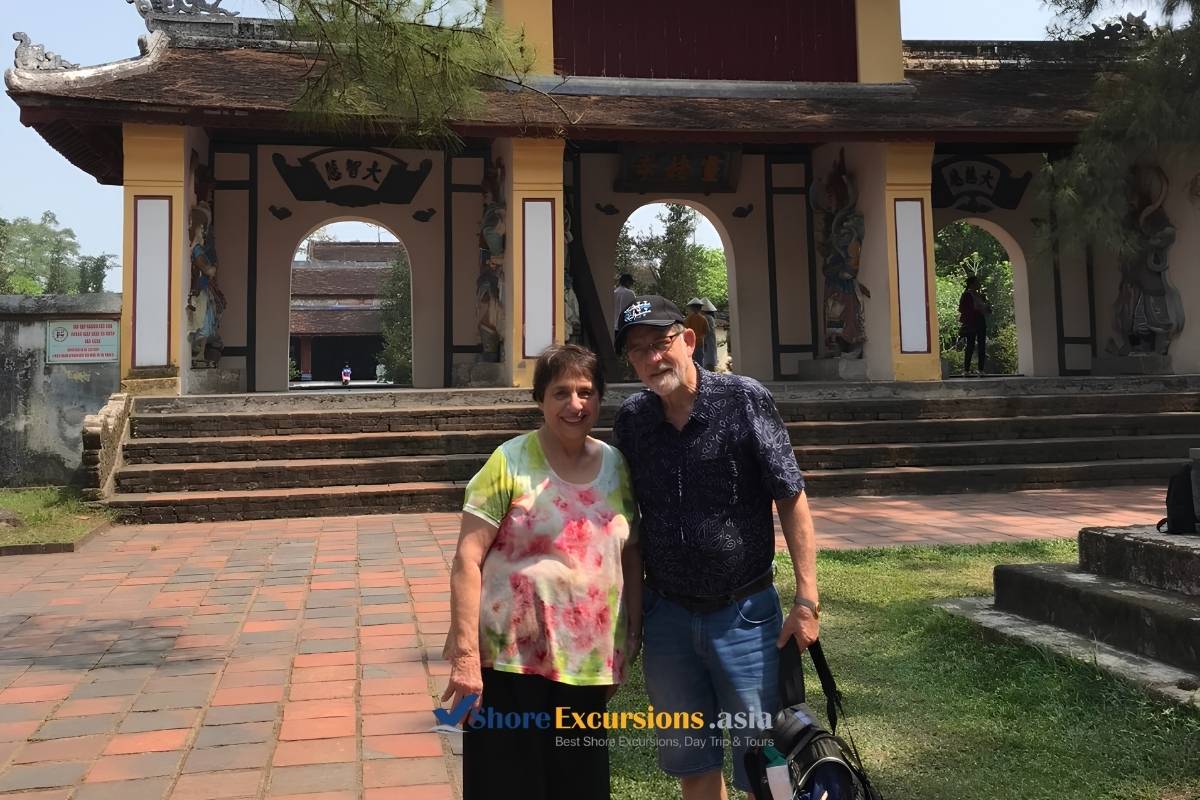
Thien Mu Pagoda offers a meaningful cultural experience without requiring several hours on site. Its historic architecture, religious significance, and scenic location make it a natural addition to a day exploring Hue. For visitors arriving by cruise ship, a guided excursion can also provide useful historical context and reduce the effort involved in arranging transport between attractions.
A sample itinerary from Chan May Port might include:
- Chan May Port pickup: Meet your driver or guide and travel toward Hue.
- Thien Mu Pagoda: Spend approximately 45 – 60 minutes exploring the tower, temple grounds, and riverside setting.
- Hue Imperial City: Discover the former royal capital and its historic gates, courtyards, and palaces.
- Local lunch: Sample Hue specialties at a restaurant suited to your schedule and dietary needs.
- A royal tomb: Visit Khai Dinh Tomb or another suitable site if travel time permits.
- Return to Chan May Port: Allow a comfortable buffer for traffic and port procedures.
Other Attractions to Visit Near Thien Mu Pagoda
- Hue Imperial City: The Hue Imperial City was the political and ceremonial center of the Nguyen dynasty. It is one of the most rewarding places to combine with Thien Mu Pagoda.
- Perfume River: A boat trip along Perfume River offers a different perspective on the city and can make the journey to or from the pagoda part of the experience.
- Khai Dinh Tomb: Located outside the city center, Khai Dinh Tomb is known for its elaborate decoration and blend of Vietnamese and European architectural influences. It can be a good addition to a longer itinerary, provided sufficient time is available for travel.
Frequently Asked Questions About Thien Mu Pagoda
Is Thien Mu Pagoda Worth Visiting?
Yes, Thien Mu Pagoda is worth visiting, especially for travelers interested in Hue’s Buddhist heritage, historic architecture, and peaceful riverside scenery. The visit is relatively short, so the pagoda fits comfortably into a half-day or full-day sightseeing itinerary.
Why is Thien Mu Pagoda famous?
Thien Mu Pagoda is famous for its history dating to 1601, its seven-story Phuoc Duyen Tower, and its location overlooking the Perfume River. It is also an important center of Buddhist heritage in Hue.
Can you take a boat to Thien Mu Pagoda?
Yes, boat trips on the Perfume River may include access to the pagoda. Routes and stopping arrangements vary by operator, so confirm the details before booking.
What should I wear to Thien Mu Pagoda?
Wear modest clothing that covers your shoulders and knees. Comfortable walking shoes are useful, and visitors should follow local instructions in worship areas.
Can I visit Thien Mu Pagoda on a shore excursion from Chan May Port?
Yes. The pagoda can be included in a day trip from Chan May Port, provided the itinerary accounts for road travel, sightseeing time, and the ship’s departure schedule. A well-organized excursion can combine the pagoda with the Imperial City and other selected attractions.
In conclusions, Thien Mu Pagoda offers a compelling introduction to Hue’s spiritual traditions, royal history, and riverside scenery. Whether you are visiting independently or arriving on a cruise, the pagoda is an excellent addition to a thoughtfully planned Hue itinerary. Combine your Vietnam shore excursions in Hue with the Imperial City and selected royal tombs to gain a broader understanding of Vietnam’s former imperial capital.


 Send Inquiry