
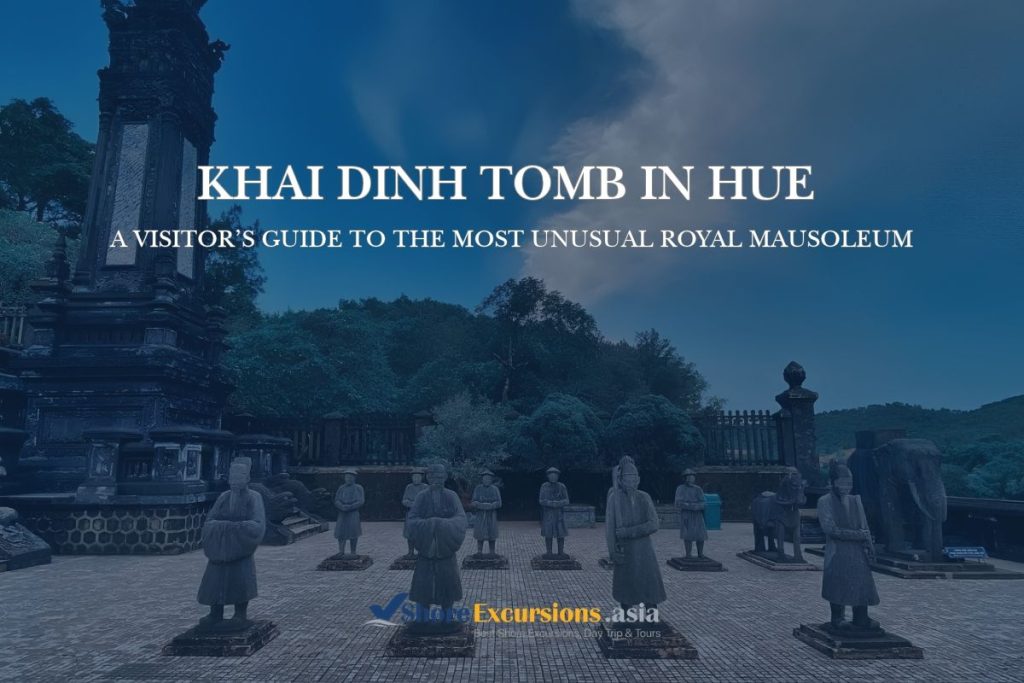
Khai Dinh Tomb (Ung Lang) is the mausoleum of Emperor Khai Dinh, about 10 km from central Hue. Built from 1920 to 1931, it blends Vietnamese, Gothic and Roman styles and is known for its porcelain and glass mosaics. Adult tickets cost 150,000 VND, and most visitors spend 45 to 60 minutes inside.
Many first-time visitors on Hue shore excursions plan their day around the Imperial Citadel and a boat ride on the Perfume River, and treat the royal tombs as an afterthought. Khai Dinh Tomb is the one that tends to surprise people, because it looks nothing like the quiet garden mausoleums found elsewhere in the city. It is a narrow, steep complex where concrete, carved dragons and porcelain and glass mosaics share a single hillside.
This guide from Vietnam Shore Excursions explains what the tomb is, what you will see on the climb, what a ticket costs and how to fit a visit into a short day, including a port day from a cruise ship.
What Is Khai Dinh Tomb?
Khai Dinh Tomb, officially called Ung Lang or Ung Mausoleum, is the burial place of Emperor Khai Dinh, the twelfth ruler of the Nguyen Dynasty. He reigned from 1916 to 1925 and picked the site himself on the slopes of Chau Chu Mountain. Work began on 4 September 1920 and ran for eleven years, so the tomb was only finished in 1931 under his son, Emperor Bao Dai.
The complex is the smallest of the Nguyen royal tombs by area, yet it took the longest to build. Khai Dinh was also the last emperor to build a mausoleum for himself. Those two facts explain the feel of the place: a compact plot packed with detail.
Why Does the Tomb of Khai Dinh Look So Different?
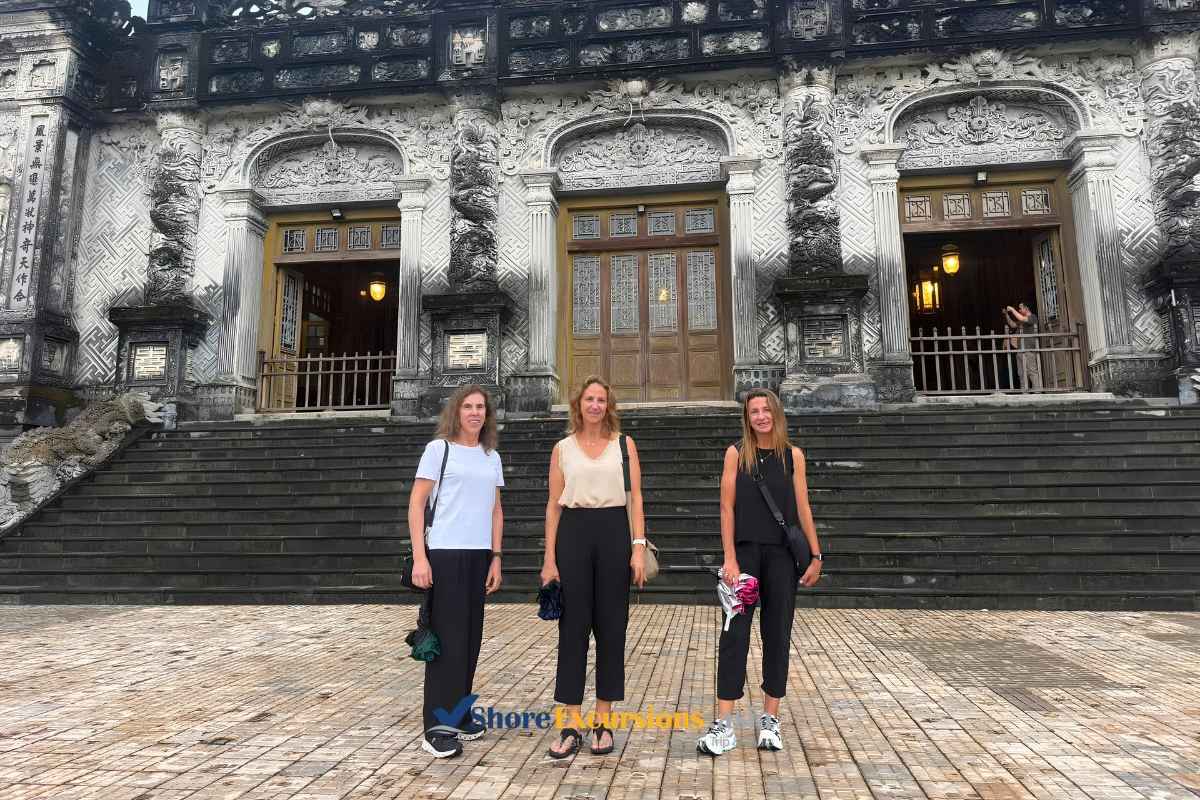
Most royal tombs in Hue follow a calm pattern of gardens, lakes and low pavilions that blend into the landscape. Khai Dinh ruled under French protection and admired European building methods, so he used concrete, iron and imported materials next to Vietnamese motifs. The result mixes Vietnamese, Gothic, Roman and Hindu-Buddhist influences, which is why some visitors love it and others find it overdone.
The table below compares the three tombs that visitors to Hue are most often offered, so you can judge which one suits your taste.
| Tomb | Setting | Character | Best for |
|---|---|---|---|
| Minh Mang | Symmetrical layout with lakes and pavilions | Formal and harmonious | Visitors who enjoy landscape architecture |
| Tu Duc | Pine forest and a large lake | Quiet and poetic | A slow, reflective visit |
| Khai Dinh | Steep hillside, compact site | Ornate and dense | Short visits, photography, decorative art |
What You Will See Inside Khai Dinh Tomb
The tomb is built as a series of terraces climbing the hillside, so the visit follows a clear order from bottom to top. Knowing the sequence helps you pace your energy and decide where to linger.
The Gate and the 127 Steps
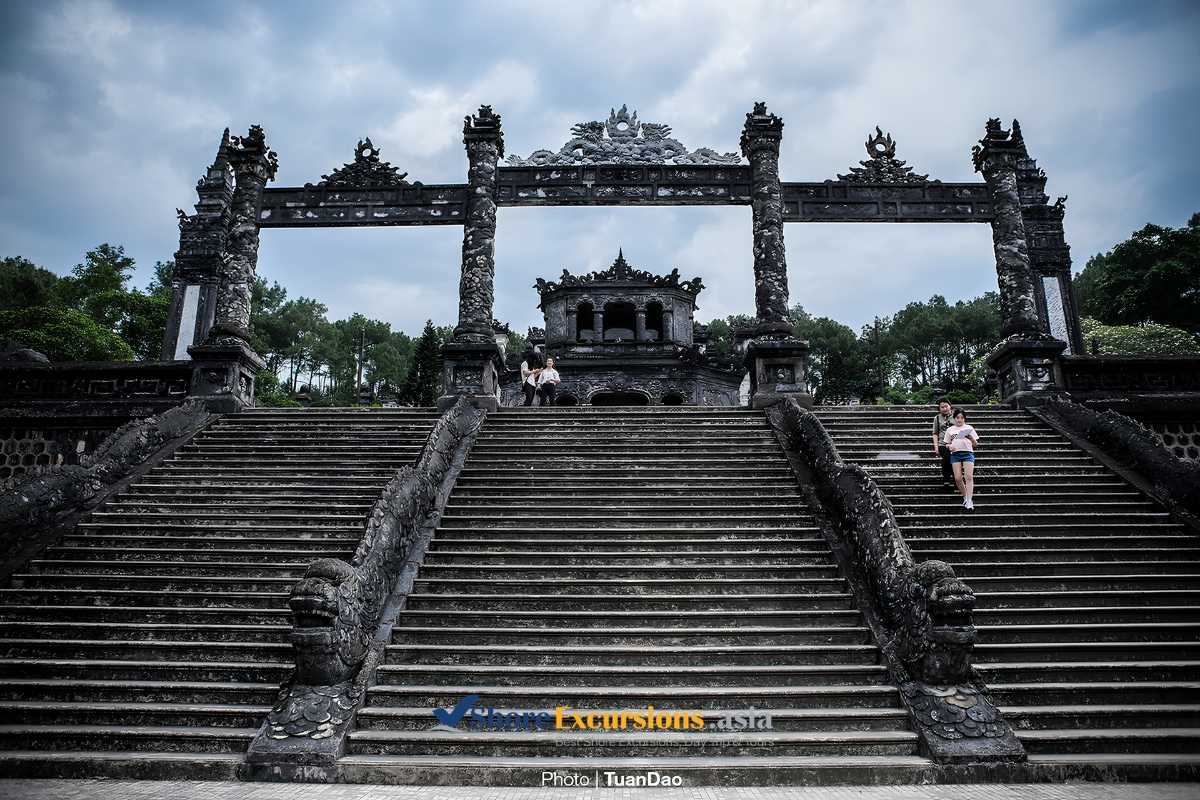
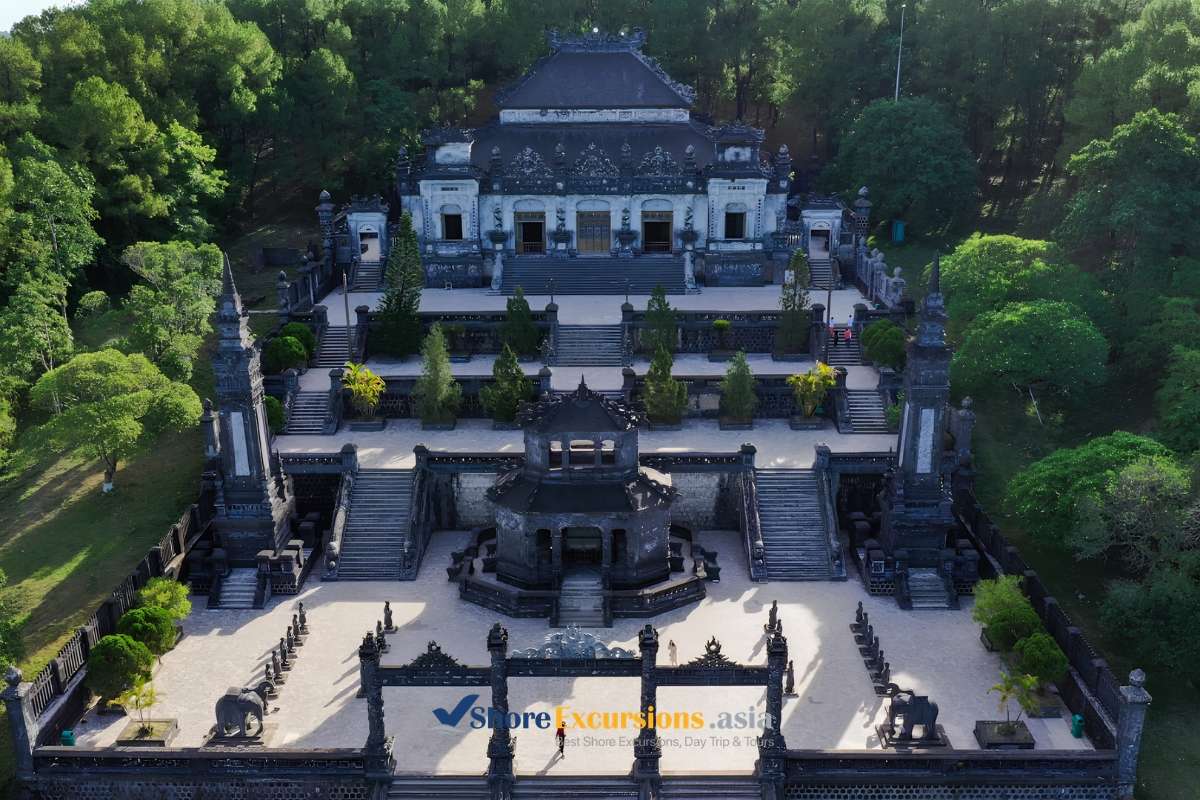
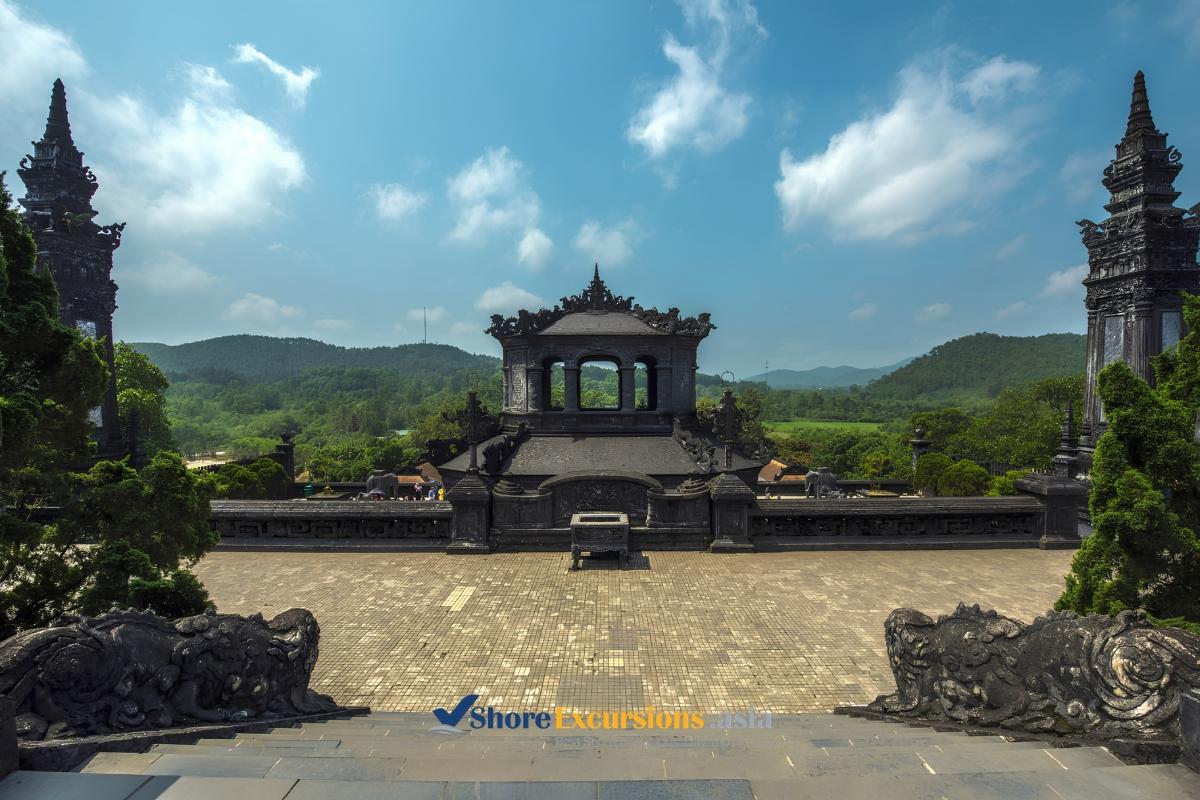
The full climb is 127 steps. A first flight of about 37 steps leads to the Tam Quan Gate, and another 29 reach the Nghi Mon gate and the lower courtyard. Dragon-railed staircases carry you up to the highest level, and the stone becomes slippery after rain.
Mandarin Statues and the Stele Pavilion
The middle courtyards hold rows of life-size stone mandarins, soldiers and horses that face the central axis. Close by stands an octagonal pavilion sheltering a stone stele about 3.1 m high that records the emperor’s life. Take a minute here, because the carving on the figures is easy to miss when you are heading for the palace.\
Thien Dinh Palace
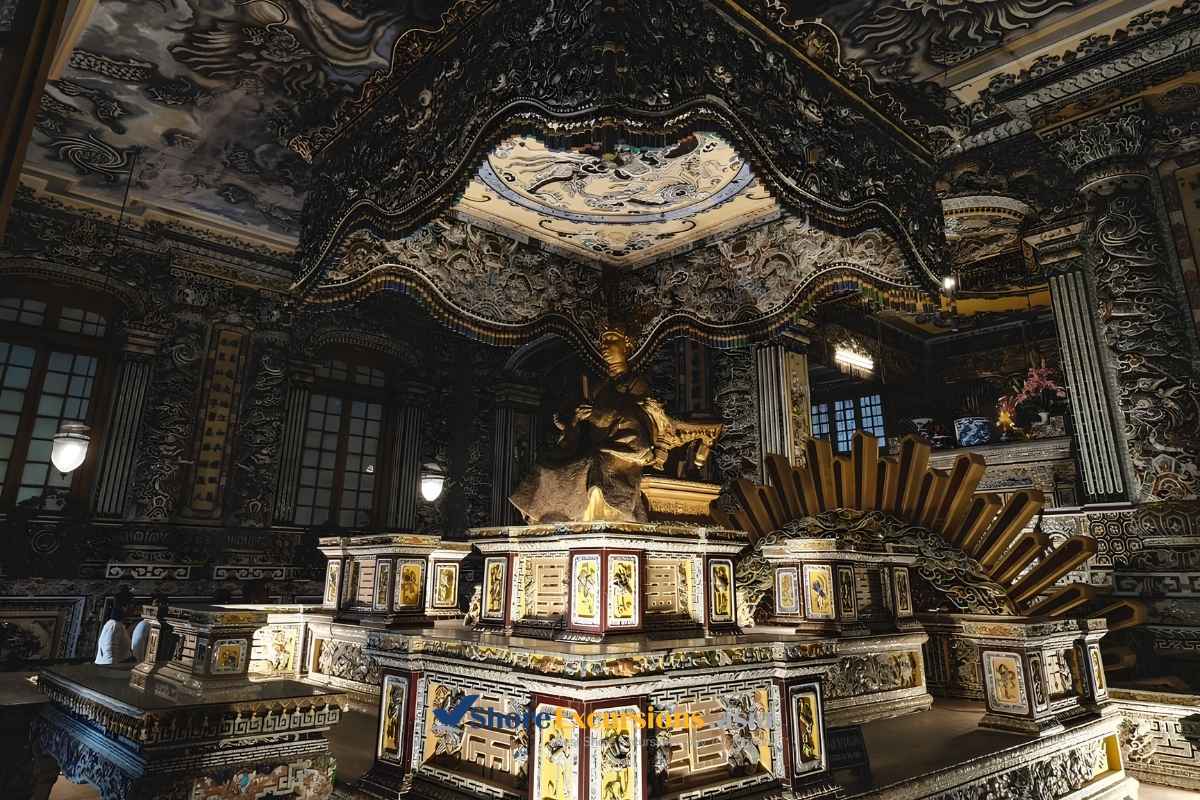
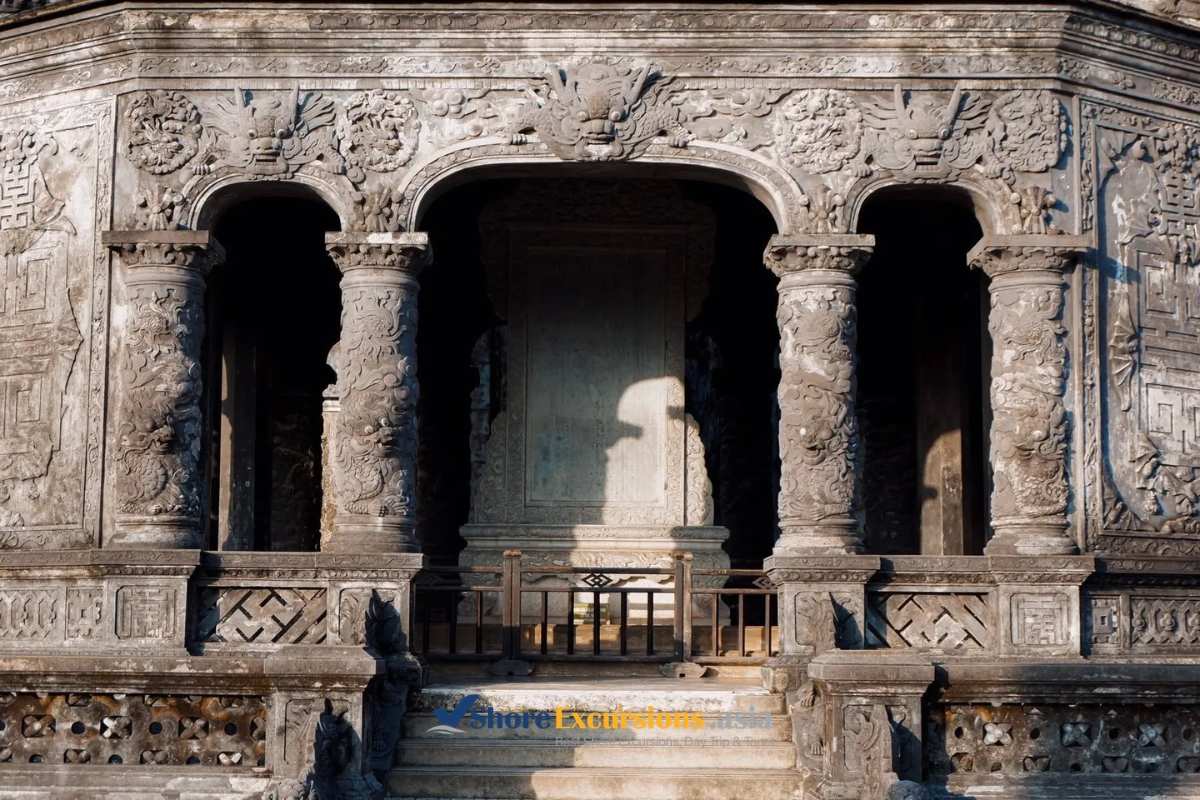
Thien Dinh Palace sits on the fifth and highest level, and it is the reason most people come. Every wall and ceiling is covered in mosaics made from broken porcelain and coloured glass, with dragons, clouds, flowers and the eight precious objects. In the front chamber, called Khai Thanh, a gilded bronze statue of Khai Dinh sits under a decorated canopy. The statue was made in 1920 by European craftsmen and later gilded by an artisan in Hue.
Khai Dinh Tomb Entrance Fee and Opening Hours
Prices and hours are set by the Hue Monuments Conservation Centre and can change, so treat the figures below as the most recent published rates and confirm them before you go.
| Detail | Information |
|---|---|
| Location | Chau Chu Mountain, Thuy Bang area, about 10 km south of Hue city centre |
| Adult ticket | 150,000 VND (roughly 6 USD) |
| Children | 30,000 VND for ages 7 to 12 in most listings, younger children free |
| Opening hours | Usually 7:00 to 17:30, with earlier closing reported in winter |
| Combo ticket | Imperial City, Tu Duc, Minh Mang and Khai Dinh: 530,000 VND per adult |
| Time needed | 45 to 60 minutes for the tomb itself |
The combo ticket only makes sense if you plan to see all four sites. On a cruise port day you will rarely have time for that, so a single ticket is usually the better choice.
How to Get to King Khai Dinh Tomb
Khai Dinh Tomb is located approximately 10 km from Hue city center and is relatively easy to reach by road. Depending on traffic and your chosen mode of transport, the journey usually takes around 20–30 minutes.
Getting to the tomb from Hue city center:
- By taxi or ride-hailing app: A convenient option for visitors who prefer a comfortable, direct transfer.
- By motorbike: Ideal for independent travelers who want more flexibility when exploring Hue.
- By public bus: Buses are available, but journeys tend to be slower and may involve additional walking, making this option less practical for visitors with limited time.
Travel tip: If you take a taxi or private car, consider arranging for your driver to wait while you visit the tomb. Finding a return ride near the entrance can be difficult during busy hours.
Getting to Khai Dinh Tomb from cruise ports
Cruise passengers should allow extra travel time when planning a visit to Khai Dinh Tomb, as both major ports are located some distance from Hue:
- From Chan May Port: Approximately 62 km from Hue, with a road transfer of around 1 – 1.5 hours.
- From Tien Sa Port (Da Nang): The journey is considerably longer, so visitors should plan their shore excursion carefully and allow sufficient time to return to the ship.
Before setting off, check your ship’s arrival and departure schedule and factor in potential traffic delays. For more information about transfer options and planning your time ashore, see our guide to Vietnam shore excursion transportation.
How Long to Spend at Khai Dinh Tomb: A Sample Port Day
The tomb works best as one stop in a wider Hue day rather than the only goal. The plan below is an illustration for a ship that docks at Chan May at 8:00 with all aboard at 17:00, not a fixed schedule.
- 8:15: leave the port and drive towards Hue.
- 9:30 to 10:30: Khai Dinh Tomb, climbing at an easy pace.
- 10:45 to 12:45: the Hue Imperial Citadel.
- 13:00: lunch in town.
- 14:00 to 14:30: Thien Mu Pagoda beside the Perfume River.
- 14:45: drive back, arriving around 16:15 with a buffer before departure.
The ship will not wait for independent travellers, so the buffer matters more than the extra stop. If you would rather not manage the driving and timing yourself, a guided Hue royal tombs day handles the transfers and ticketing.
Khai Dinh Tomb Dress Code and Visitor Tips
The site is a heritage monument and a place of ancestor worship, so a few habits make the visit smoother. These tips are the ones Hue guides commonly pass on to first-time visitors.
- Cover shoulders and knees. Enforcement is relaxed, but modest clothing is the safer choice.
- Wear shoes with real grip, since the steps are steep and the stone can be wet.
- Arrive early or after lunch, when tour groups usually thin out.
- Carry water and small VND notes for tickets and drinks.
- Look up inside Thien Dinh Palace, because the ceiling mosaics are as detailed as the walls.
- Take photos from the top courtyard looking down the stairs towards the valley.
Common Mistakes to Avoid when Visiting Tomb of Khai Dinh
Most disappointments at Khai Dinh Tomb come from expectations, timing, and a lack of preparation rather than from the site itself. Although the tomb is relatively compact, its steep staircase, elaborate architecture, and detailed interior deserve more time and attention than many visitors expect. Avoiding the following mistakes will help you enjoy the visit more comfortably.
- Rushing through the visit in 20 minutes. The mosaics, carved details, and intricate decorations reward slow looking. Allow at least 45–60 minutes to explore the tomb properly, including time for the climb and photographs.
- Expecting a quiet garden tomb. Unlike the peaceful, nature-oriented setting of Tu Duc Tomb, Khai Dinh Tomb is deliberately ornate, with elaborate stonework, concrete architecture, and colorful ceramic mosaics. If you prefer tranquil gardens and shaded walking paths, consider visiting Tu Duc instead.
- Skipping the entrance fee and opening-hours check. Ticket prices and visiting hours can change, particularly around public holidays or special occasions. The ticket office may also stop selling tickets before the official closing time, so avoid arriving at the last minute.
- Pairing Hue and Hoi An in one day from Chan May Port. Although both destinations are popular shore excursions, the considerable driving time between them leaves too little room to explore either properly. Choose one destination rather than trying to squeeze both into a single port day.
- Visiting during the hottest part of the day. The climb to the main ceremonial courtyard involves a long sequence of exposed stone steps. Midday heat can make the ascent uncomfortable, especially during Hue’s warmer months. Early morning or late afternoon is generally more pleasant.
- Underestimating the staircase. Khai Dinh Tomb is built into a hillside, and reaching the main structures requires climbing several flights of stone stairs. Visitors with limited mobility, knee problems, or difficulty walking should consider this before planning their visit.
- Wearing unsuitable footwear. Sandals with slippery soles, high heels, or uncomfortable shoes can make the stone staircase difficult to navigate. Choose comfortable walking shoes with good grip.
- Looking only at the exterior. The tomb’s impressive stone staircase and European-influenced façade are visually striking, but the interior of Thien Dinh Palace is equally important. Do not miss the elaborate glass and ceramic mosaics, gilded decorations, and bronze statue of Emperor Khai Dinh.
- Ignoring the architectural details. A quick photograph of the main building does not reveal much of what makes this tomb distinctive. Take time to notice the combination of Vietnamese imperial motifs, French architectural influences, and Buddhist-inspired decorative elements.
- Expecting extensive facilities on-site. The tomb is primarily a historical monument rather than a developed tourist complex. Do not assume you will find plenty of restaurants, shaded seating areas, or visitor facilities immediately around the site. Plan meals and refreshments accordingly.
Is Khai Dinh Tomb Worth Visiting?
For most visitors to Hue the answer is yes, particularly if you want a break from the usual royal tomb style. It is honest to say that it will not suit everyone, so here is the balance.
What works well:
- A compact site that can be seen in under an hour.
- Mosaic work that is hard to find anywhere else in Vietnam.
- A strong contrast with the other Nguyen tombs.
What to weigh up:
- The 127 steps are tiring and hard for visitors with limited mobility.
- Mid-morning can feel busy inside the palace.
- The decoration is dense, and some visitors prefer quieter sites.
Frequently Asked Questions about Tomb of Khai Dinh
What is the best time to visit Khai Dinh Tomb?
Early morning is generally the most comfortable time to visit, when temperatures are cooler and visitor numbers may be lower. The dry season, from approximately March to August, is also popular for sightseeing, although Hue can become very hot during summer. If visiting during the rainy season, bring an umbrella and wear shoes with good grip.
Why is Khai Dinh Tomb different from other royal tombs in Hue?
Unlike the more traditional Vietnamese imperial tombs, Khai Dinh Tomb combines Vietnamese architectural traditions with French and other European influences. Its concrete construction, elaborate ceramic and glass mosaics, dark stone exterior, and richly decorated Thien Dinh Palace make it one of the most distinctive royal tombs in Vietnam.
Who built Khai Dinh Tomb, and when was it completed?
Construction began in 1920 during the reign of Emperor Khai Dinh, the 12th emperor of the Nguyen Dynasty. The project continued after his death in 1925 and was completed in 1931 under Emperor Bao Dai. The tomb therefore took approximately 11 years to finish.
What is the most impressive part of Khai Dinh Tomb?
Thien Dinh Palace is widely considered the highlight. Its interior features intricate glass and ceramic mosaics, elaborate ceiling decorations, gilded details, and a bronze statue of Emperor Khai Dinh. The contrast between the relatively dark exterior and the colorful interior makes this area particularly memorable.
Is Khai Dinh Tomb difficult to visit?
The tomb is relatively compact, but visitors must climb several flights of stone stairs to reach the main palace. The steps can be tiring, especially in hot weather, and may become slippery after rain. Comfortable footwear and a reasonable level of mobility are recommended.
Is Khai Dinh Tomb suitable for children and elderly visitors?
Children who can comfortably manage stairs can generally enjoy the visit. However, elderly visitors and people with mobility difficulties should be aware that the tomb has many steps and limited accessibility for wheelchair users. Taking breaks during the climb can make the experience more manageable.
Can I visit Khai Dinh Tomb and other royal tombs in one day?
Yes. Visiting Khai Dinh Tomb alongside Minh Mang Tomb and Tu Duc Tomb is a popular day-trip itinerary from Hue. These sites offer different architectural styles and historical perspectives, making them excellent complements to one another. You can also combine one or two tombs with the Imperial City, depending on your available time.
Is photography allowed inside Khai Dinh Tomb?
Photography is generally permitted in many areas of the tomb, making it a popular destination for architectural and travel photography. However, visitors should follow posted restrictions, respect any designated areas where photography is prohibited, and avoid disturbing other visitors.


 Send Inquiry
Thanks for a thoughtful and engaging article. The way you explained the main ideas helped everything come together nicely.