

Explore the timeless elegance of Notre Dame Cathedral Basilica of Saigon, celebrated as one of the world’s top 19 majestic cathedrals and the only one from Southeast Asia. This architectural gem is a symbol of Ho Chi Minh City’s rich history, attracting daily visitors seeking both spiritual solace and stunning photo opportunities.
In the bustling heart of Ho Chi Minh City, known as Saigon, the cathedral stands as a beacon of cultural heritage and historical charm. It’s not just a popular tourist spot but also a significant landmark for Vietnam. Whether you’re fascinated by its Gothic architecture, serene atmosphere, or compelling history, this guide provides essential insights for your Ho Chi Minh City shore excursions to this iconic religious site.
Overview of Saigon’s Notre Dame Cathedral
Standing in the historic center of Ho Chi Minh City, Saigon’s Notre Dame Cathedral remains one of the city’s most recognized landmarks. The cathedral represents an important symbol of colonial architecture and Catholic heritage in southern Vietnam.
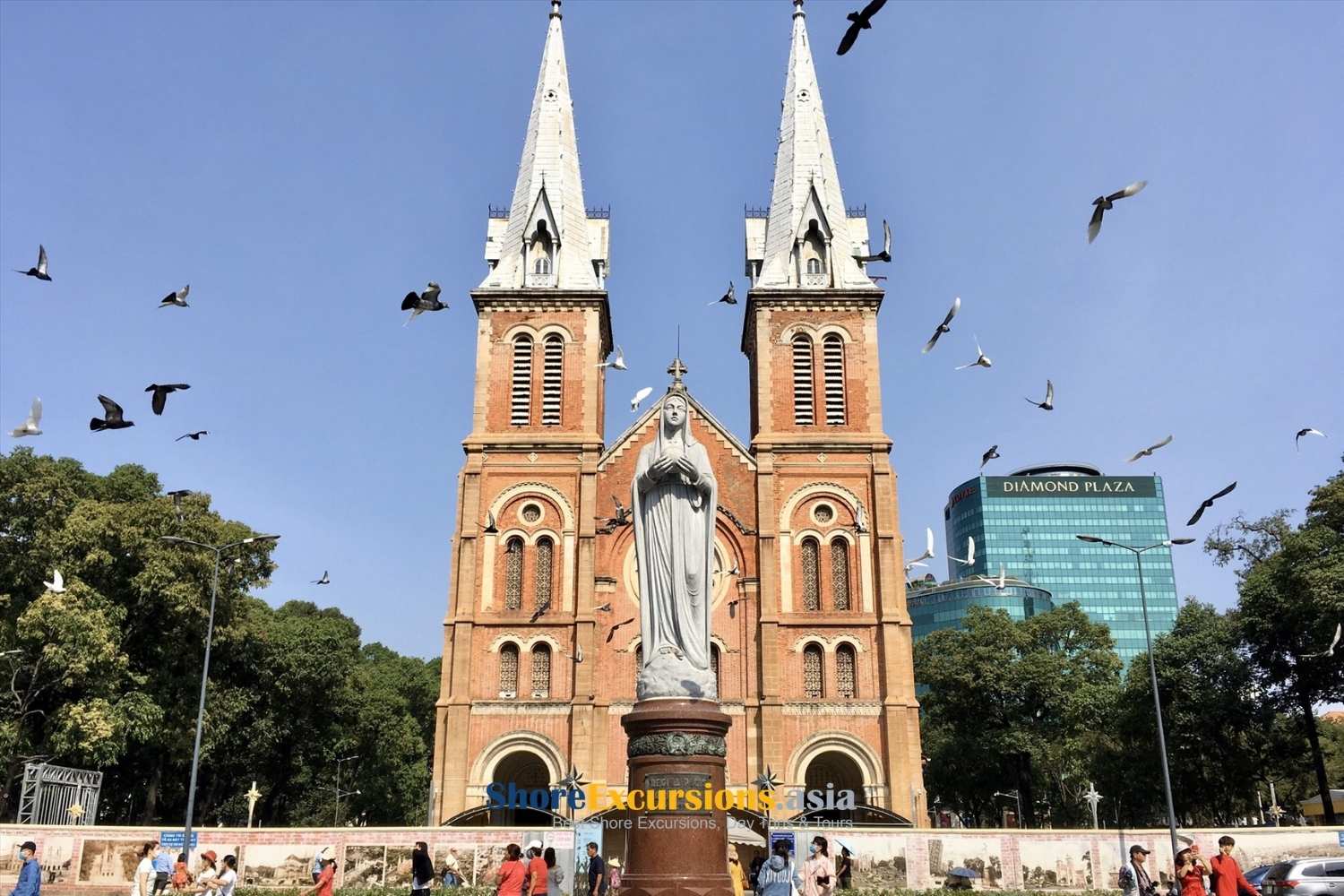
French builders completed the church in 1880 after nearly two decades of construction. Architects used imported materials and European design principles. The red brick facade and twin bell towers still define the skyline of District 1.
Today, Notre-Dame Cathedral Basilica of Saigon continues to serve both religious and cultural purposes. Local worshippers attend mass regularly. Visitors also come to admire the architecture and learn about the city’s past. The cathedral square attracts travelers, photographers, and residents throughout the day. The location also sits close to several famous attractions. Many cruise travelers visit the site during short shore excursions.
- Address: 01 Công xã Paris Street, Bến Nghé Ward, District 1, Ho Chi Minh City, Vietnam
- Opening hours: The cathedral square remains open daily. Interior access may vary during restoration periods.
- Mass schedule: Weekday and Sunday services take place regularly for the local Catholic community.
- Entrance fee: Free for visitors
- Nearby attractions: Saigon Central Post Office, Independence Palace, and Nguyen Hue Walking Street
- Best time to visit: Early morning or late afternoon for cooler weather and better photos
Notre Dame Cathedral Saigon History
The history of Notre-Dame Cathedral Basilica of Saigon reflects the growth of Ho Chi Minh City during the French colonial era. French authorities planned the church as a central place of worship for their community in Saigon.
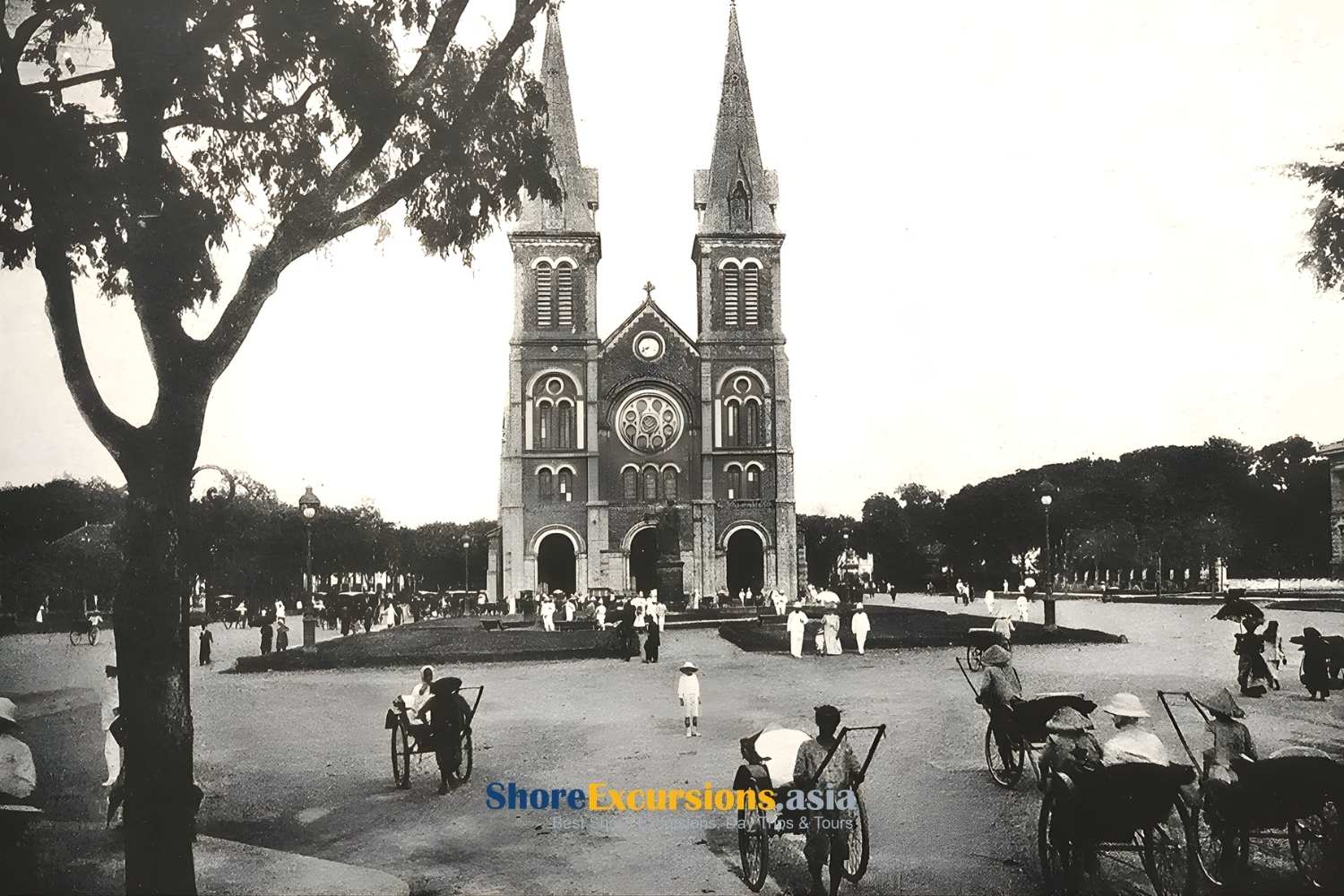
Construction started in 1863 and finished in 1880. The cathedral was designed by French architect Jules Bourard using Romanesque and Gothic influences. Builders imported most materials from France, including red bricks and stained glass windows.
The Notre Dame Cathedral Saigon history also includes an important recognition in 1962. Pope John XXIII granted the church basilica status, highlighting its importance to the Catholic community.
In 1959, Bishop Joseph Pham Van Thien installed the granite statue of Our Lady of Peace in front of the cathedral. The statue replaced an earlier monument of Bishop Pigneau de Behaine and Prince Cảnh, the son of Emperor Gia Long.
In 1960, Pope John XXIII, the head of the Vatican, reorganized the Roman Catholic dioceses in Vietnam and designated the church as the main cathedral of Saigon. Two years later, in 1962, he officially granted the building basilica status. Since that moment, the church has carried its formal name, Notre-Dame Cathedral Basilica of Saigon.
Over many decades, the cathedral has witnessed major changes in the history of Ho Chi Minh City. The building gradually became a defining landmark of urban architecture in southern Vietnam. Today, Notre-Dame Cathedral Basilica of Saigon remains an important religious center for millions of Catholics in the city and a remarkable historical site for visitors.
The cathedral is also undergoing a major restoration effort. The Saigon’s Notre Dame Cathedral renovation project, led by the Archdiocese of Ho Chi Minh City, began in 2017 and is expected to continue until 2027. The project aims to preserve the historic structure while maintaining its original architectural character.
The Architecture of Saigon Notre Dame Cathedral
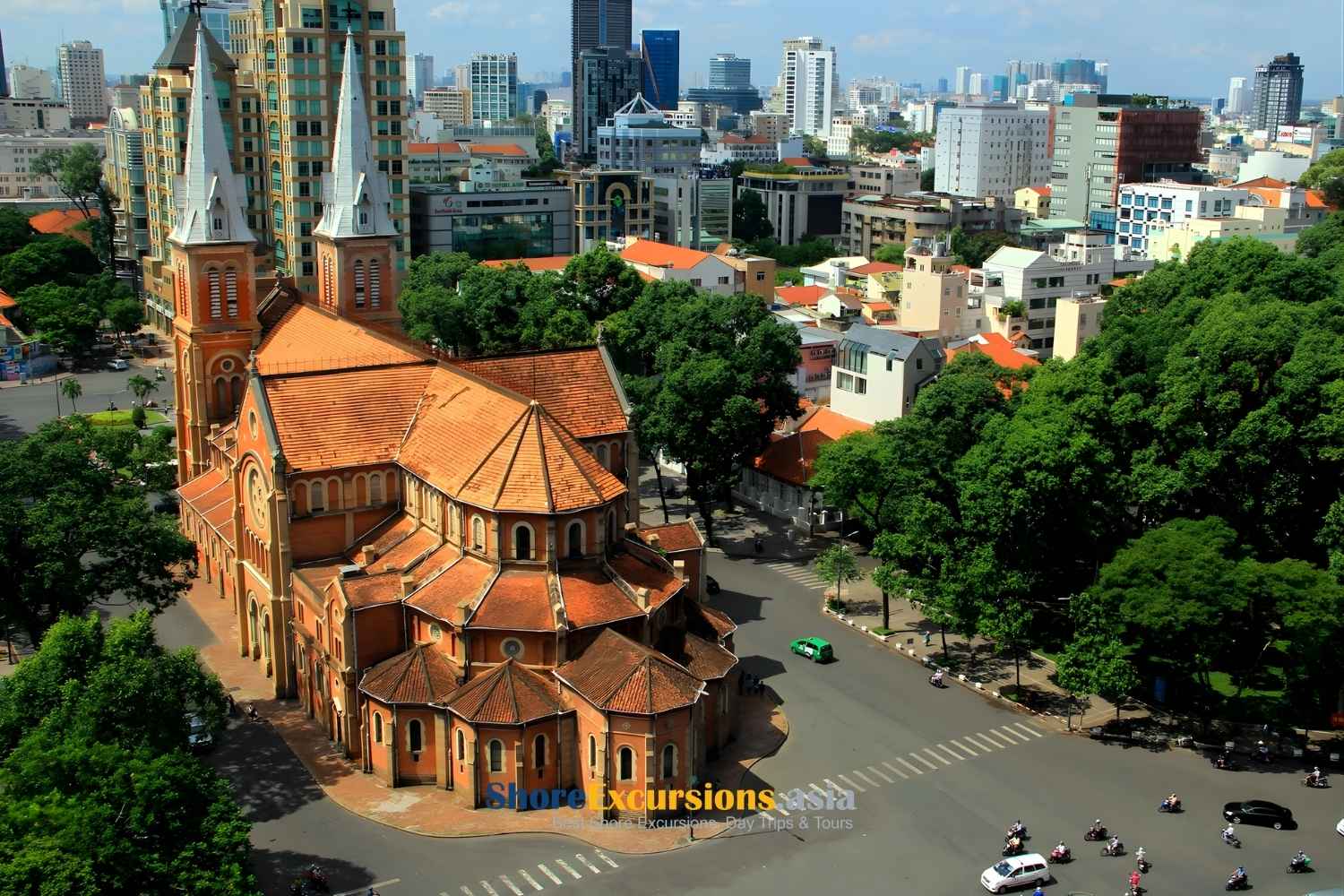
The architecture of Saigon’s Notre Dame Cathedral reflects strong European influences from the nineteenth century. French architects designed the structure to resemble major churches in Europe. At the same time, the building adapted to the tropical climate of southern Vietnam.
The cathedral combines Romanesque structure with Gothic elements. This combination creates a balanced appearance and an impressive vertical profile. Several architectural details still attract visitors and historians today.
Construction Materials
French builders selected durable materials to ensure the cathedral would last for generations. Most construction materials were shipped directly from France. The exterior walls use distinctive red bricks produced in Toulouse. Builders did not apply paint or plaster to the surface. As a result, the bricks have preserved their natural color for more than a century.
Other materials of Saigon Notre Dame Cathedral also came from Europe. The stained glass windows arrived from France and depict religious scenes. The interior tiles, metal frames, and decorative details followed European craftsmanship standards.
Architectural Design of Saigon’s Notre Dame Cathedral
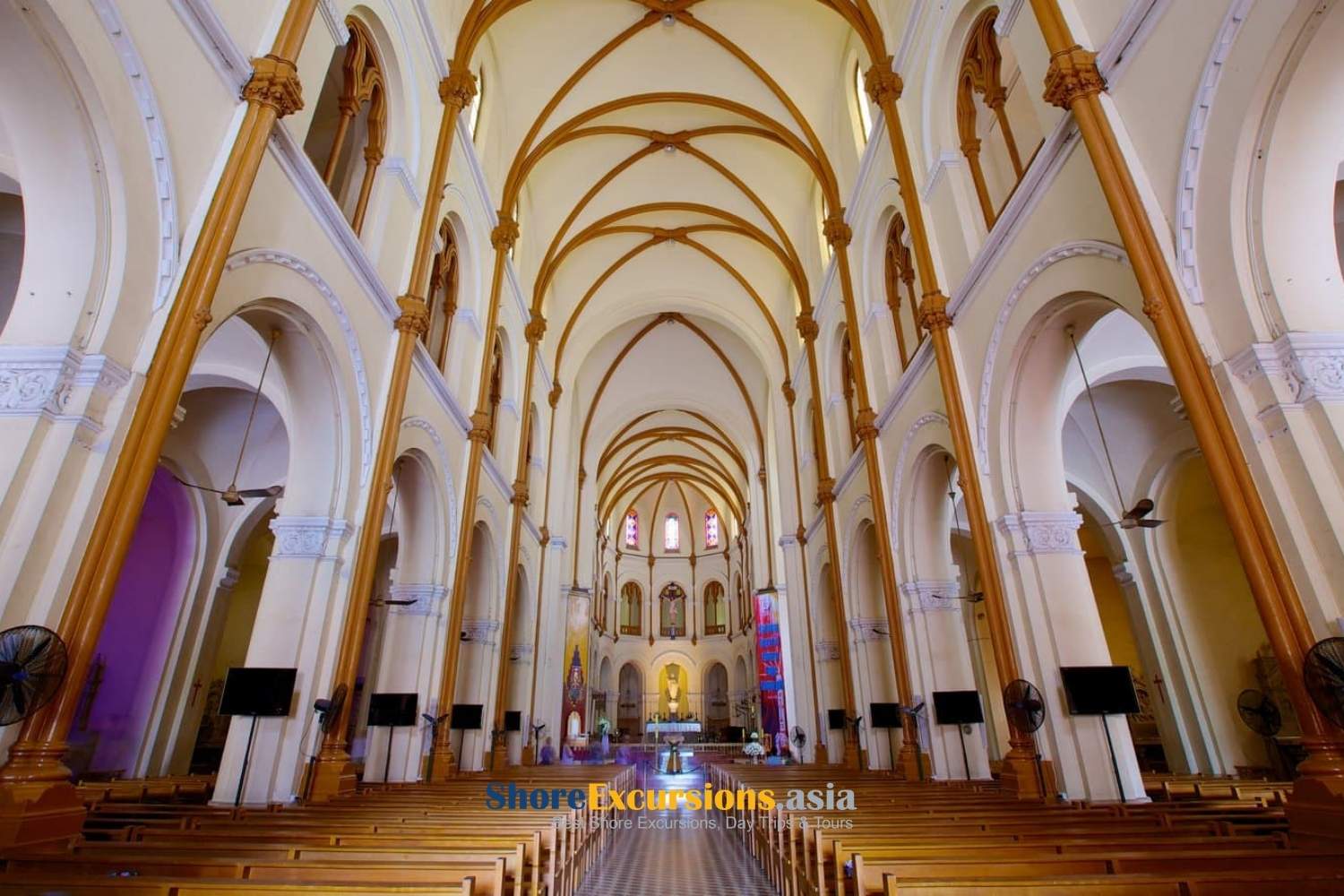
The design of the cathedral reflects both Romanesque solidity and Gothic elegance. Thick walls and rounded arches represent Romanesque architectural traditions. Tall windows and vertical proportions reveal Gothic influence.
The building follows a symmetrical layout with a long nave and two side aisles. Rows of columns support the high ceiling and guide visitors toward the altar. Natural light enters through stained glass windows, creating a peaceful atmosphere inside the church. Architect Jules Bourard designed the cathedral to stand prominently in the city center. His plan ensured the building remained visible from several surrounding streets.
The Iconic Twin Bell Towers
One of the most recognizable features of the Saigon cathedral is its twin bell towers. The towers rise about 58 meters above the ground and dominate the skyline of central Ho Chi Minh City.
Each tower contains several bronze bells. In total, six bells were installed inside the towers. These bells once rang across the colonial city and announced important religious ceremonies. Metal crosses crown the towers and add to the cathedral’s vertical silhouette. The towers continue to serve as one of the most iconic landmarks in the city today.
The Cathedral Square and Front Courtyard
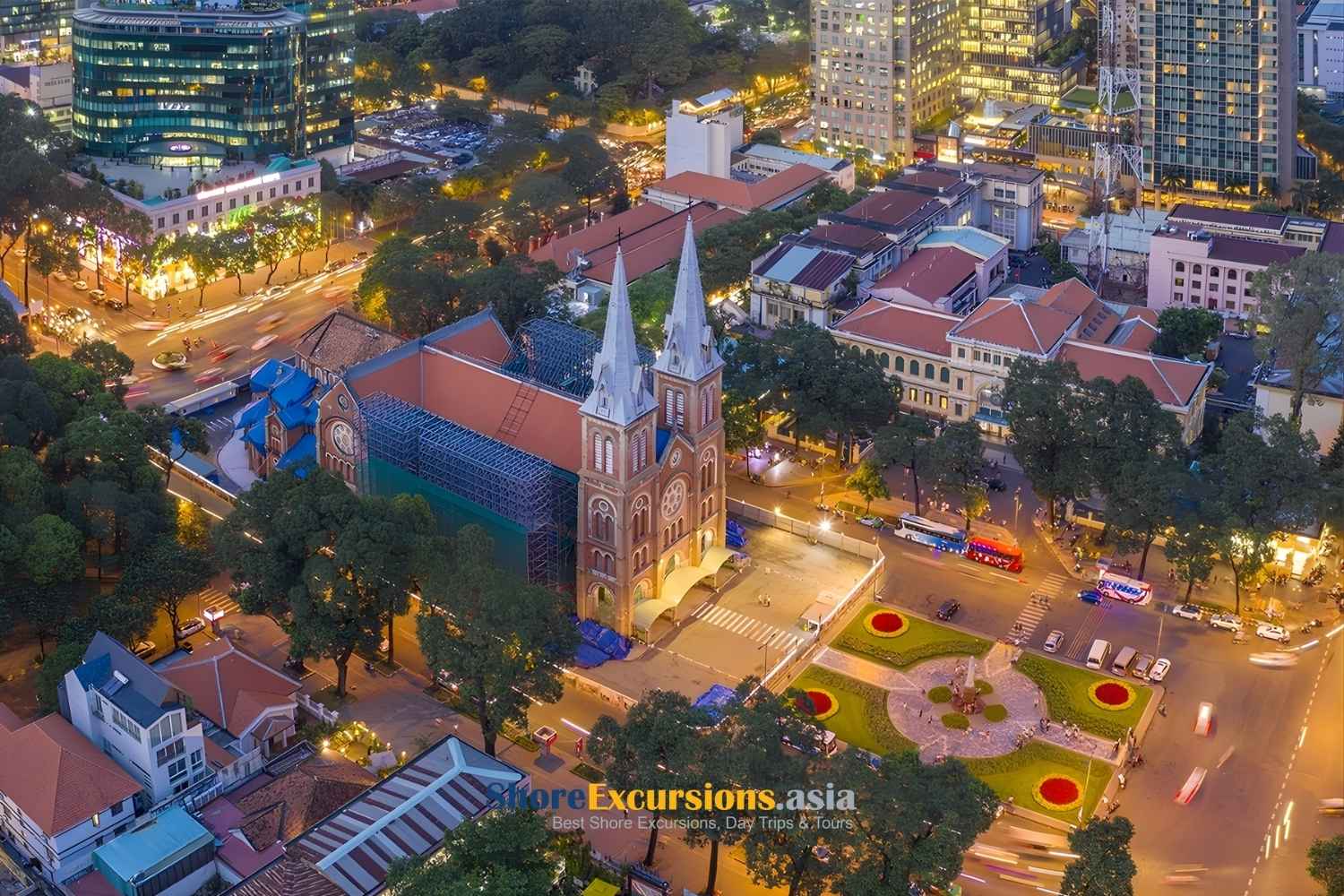
The open square in front of Notre-Dame Cathedral Basilica of Saigon forms an important part of the site’s architecture. The space creates a clear view of the cathedral facade and its twin towers. At the center of the square stands the statue of Our Lady of Peace. The statue faces the cathedral and has become a spiritual gathering point for local Catholics.
The square also provides a peaceful green space in the busy District 1 area. Many visitors coming to Ho Chi Minh City relax on the benches, take photos, or observe daily life in the city center. Today, this open campus remains one of the most recognizable public spaces in Ho Chi Minh City.
Guide to Visiting Saigon’s Notre Dame Cathedral
A visit to Saigon’s Notre Dame Cathedral offers travelers a chance to experience one of the most historic landmarks in Ho Chi Minh City. The cathedral stands in the heart of District 1, surrounded by many important attractions and vibrant city streets. Many travelers include this site in their city itinerary because it is easy to reach and rich in history. A clear guide to visit Notre Dame Cathedral Basilica of Saigon helps visitors plan their time effectively. This guide covers essential details such as location, opening hours, mass schedules, and useful travel tips to one of top things to do in Ho Chi Minh City.
How to get to Saigon Notre Dame Cathedral Basilica?
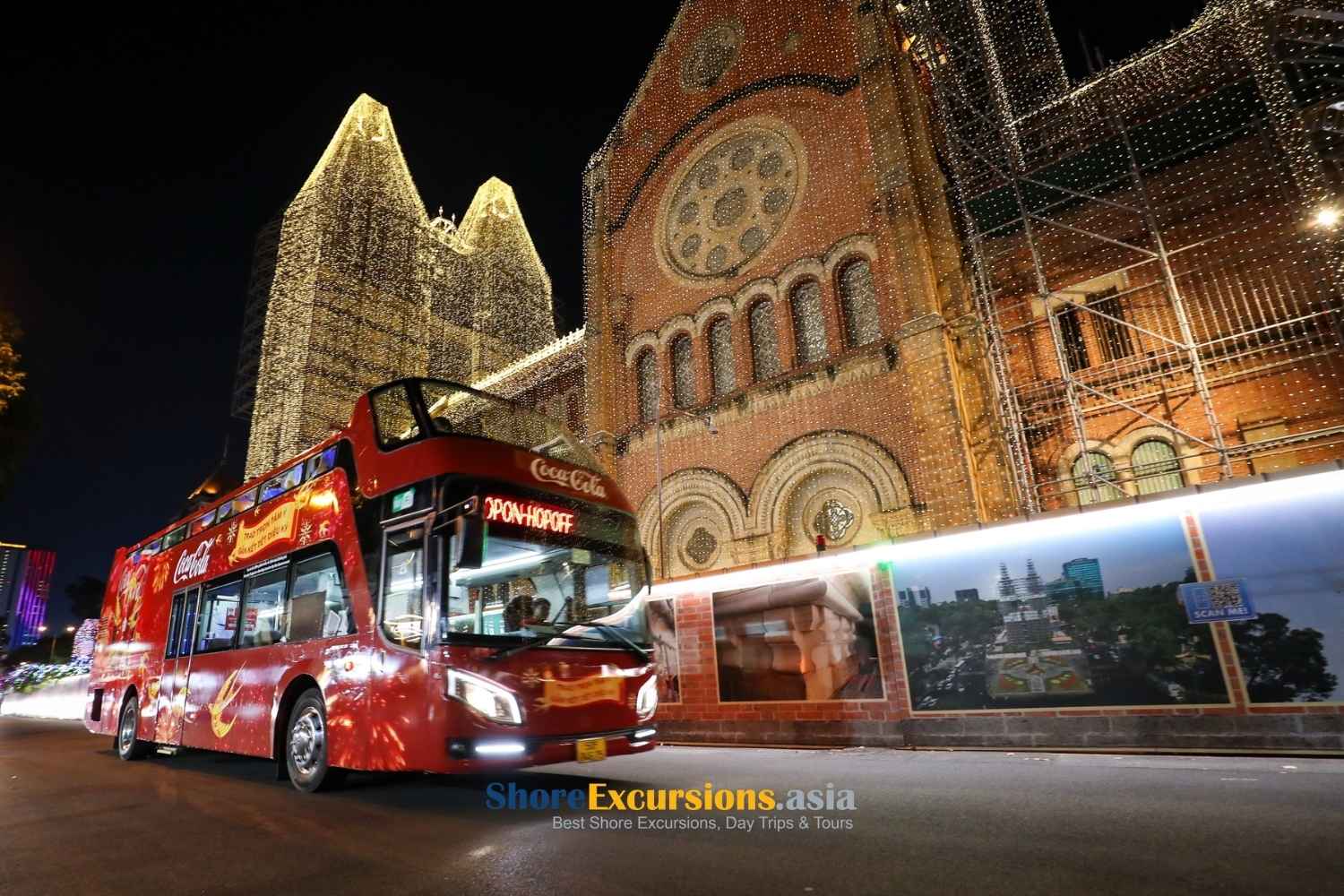
Travelers can easily reach Notre-Dame Cathedral Basilica of Saigon because the landmark stands in the center of Ho Chi Minh City. The cathedral sits on Công xã Paris Square in District 1, an area surrounded by major tourist attractions. Visitors can choose several transportation options depending on their travel style and budget.
- Taxi: Taxis are readily available throughout Ho Chi Minh City. You can simply hail one or use ride-hailing apps like Grab or local taxi companies.
- Motorbike Taxi (Xe om): Xe om drivers can be found near popular tourist areas and offer a more flexible and sometimes faster option for navigating through city traffic.
- Private Vehicle: If you have your car or rental, there are parking facilities nearby where you can park and easily access the cathedral.
- Public Transportation: Ho Chi Minh City has an extensive network of buses that pass through the city center. You can take buses such as 04, 120, 18, 30, 31, 36, or 93, depending on your starting point, to reach the cathedral. Public buses are a budget-friendly option for getting around the city.
The opening hours of Saigon’s Notre Dame Cathedral
Notre Dame Cathedral Basilica of Saigon is generally open daily for visitors. It’s recommended to check the specific Mass schedule if you plan to attend a service, as timings may vary based on seasonal changes or special events.
- Opening Hours: It’s 8 a.m. to 11 a.m. and 2 p.m. to 4 p.m. daily. The cathedral is typically open from early morning until evening.
- Mass Timings: It’s 5:30 a.m. and 5:30 p.m. For those interested in attending Mass, there are usually several services held throughout the week.
- Every Sunday Mass: It’s 5.30 a.m.; 6.45 a.m.; 8 a.m.; 9.30 a.m. (English Mass); 4.00 p.m.; 5.30 p.m.; 6.30 p.m.
Entrance fee to Saigon’s Notre Dame Cathedral
Travelers do not need to purchase a ticket to visit the cathedral. Entrance to Saigon’s Notre Dame Cathedral remains completely free for both tourists and local residents.
This open access allows visitors to explore one of the most important historical landmarks in Ho Chi Minh City without additional cost. Many travelers stop by the cathedral during a walking tour of the city center. The surrounding square also offers a pleasant space to relax and take photographs.
City Attractions Near Saigon Cathedral

The central location of Saigon’s Notre Dame Cathedral allows visitors to explore several famous attractions within a short walking distance. Many travelers include these sites in the same itinerary because they sit close together in District 1. This area represents the historic and cultural heart of Ho Chi Minh City.
- Saigon Central Post Office: A historic French colonial building across from the cathedral, famous for its grand interior and classic architecture.
- Independence Palace: A major historical landmark about a 10-minute walk away, known for its role in the end of the Vietnam War.
- Nguyen Hue Walking Street: A lively pedestrian boulevard where visitors can enjoy cafés, street performances, and evening city views.
- Ho Chi Minh City Book Street: A peaceful cultural street near the cathedral lined with bookstores, cafés, and shaded seating areas.
- Saigon Opera House: A beautifully preserved French colonial theater that hosts cultural performances and stands as an architectural highlight in the city center.
- War Remnants Museum: One of the most visited museums in the city, offering powerful exhibitions about the Vietnam War.
- Ben Thanh Market: A bustling market where travelers can shop for souvenirs, handicrafts, and local street food.
Several restaurants and dining options near Notre Dame Cathedral in Ho Chi Minh City
These restaurants provide convenient dining options for visitors exploring Notre Dame Cathedral and the surrounding area in Ho Chi Minh City. There are several restaurants and dining options near Notre Dame Cathedral Basilica of Saigon in Ho Chi Minh City.
- L’Usine Le Loi: A stylish cafe and restaurant serving European and Vietnamese cuisine, located about a 5-minute walk from the cathedral.
- The Garlik De Tham: Known for its cozy atmosphere and wide range of dishes including Vietnamese and Western cuisine, situated around a 10-minute walk from the cathedral.
- Baba’s Kitchen: A nearby restaurant offering delicious Indian food, perfect for those looking to enjoy flavors from South Asia, located approximately a 7-minute walk away.
- Secret Garden Home-Cooked Vietnamese Restaurant: This restaurant offers traditional Vietnamese dishes in a rooftop garden setting, about a 10-minute walk from the cathedral.
A visit to Notre Dame Cathedral of Saigon is not just a journey through architectural brilliance but also an immersion into the rich tapestry of Vietnam’s cultural and religious heritage.The cathedral is also a convenient stop for cruise travelers who want a quick introduction to the city’s cultural heritage.
If you would like to explore this historic cathedral and discover more highlights of Ho Chi Minh City, consider planning your trip with Vietnam Shore Excursions. Their local experts organize well-designed shore excursions that allow cruise travelers to experience the city’s culture, history, and iconic landmarks comfortably and efficiently.


 Contact Us via Messenger
 Send Inquiry